Published On:
July 15, 2025Last Updated:
October 9, 2026
“A journey of a thousand miles begins with a single step.” In web development, that first step is often building an MVP – a Minimum Viable Product. It’s not about launching a polished, full-featured website, but creating a lean, functional version that solves one core problem for real users.
According to CB Insights, 35% of startups fail due to a lack of market need. An MVP helps you avoid that fate by validating your idea early and efficiently.
Platforms like Airbnb, Facebook, and Dropbox all started as MVPs. Should your web project take the same route? If your goal is to test your concept, minimize development costs, and launch quickly, the answer is likely YES.
In this blog, we’ll explore how to approach MVP development for the web, from idea to launch. So you can build smarter, faster, and with purpose.
A Minimum Viable Product (MVP) in web development is the most basic version of a website that includes only the essential features needed to solve a core user problem and validate your idea. It’s built quickly and efficiently to test assumptions, gather real user feedback, and guide future development.
Instead of aiming for perfection, an MVP focuses on what truly matters: functionality, usability, and value. This lean approach helps reduce development time and cost, while minimizing risk through data-driven iteration.
The MVP approach is crucial in web development because it helps businesses validate ideas early, reduce risk, and minimize MVP development costs. Instead of investing time and resources into building a full-featured product upfront, teams can launch a simplified version that solves a core user problem.
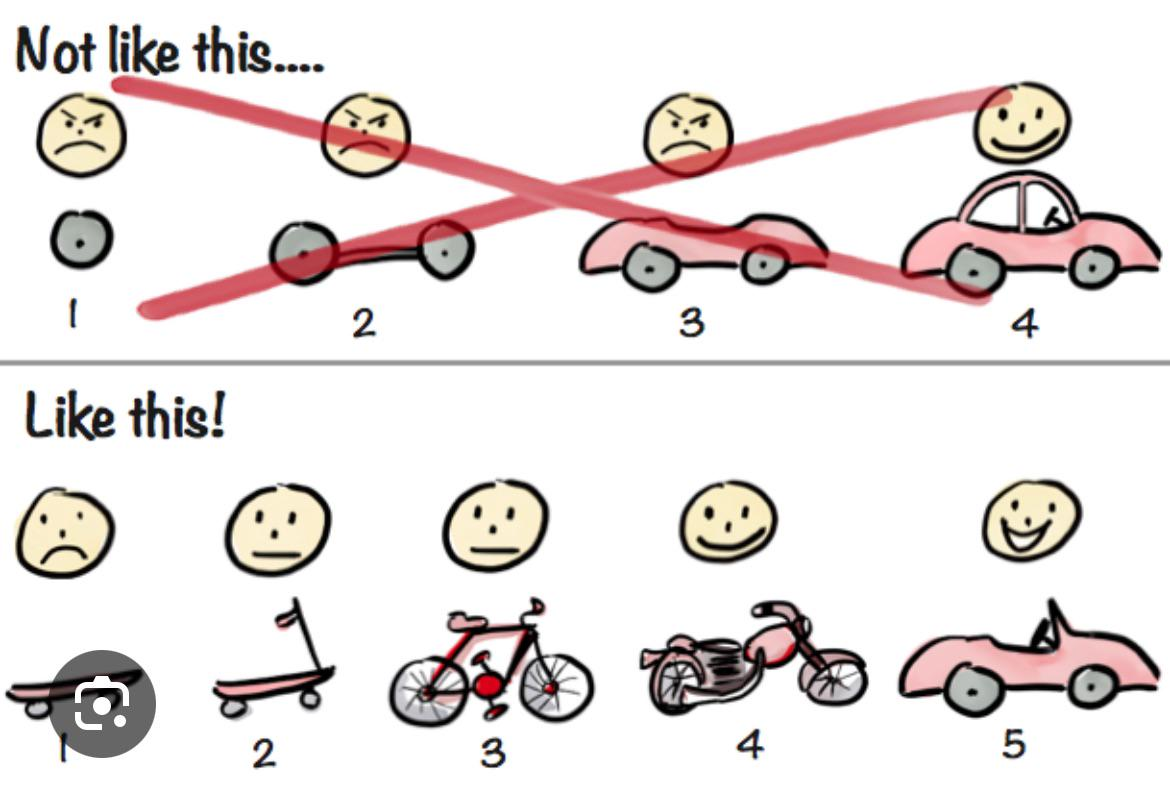
Think of it like building a transportation solution: instead of assembling a car from the start, you begin with a skateboard — something basic but functional. From there, you iterate: scooter → bicycle → motorbike → car. Each version delivers value and teaches you what users truly need.
This same logic applies to MVPs in web development — launch small, learn fast, and build better with every version.
Building an MVP website offers a range of strategic advantages, especially for startups, entrepreneurs, or anyone testing a new digital idea. Here’s how it sets you up for smarter success:
1. Faster Time to Market
Launch quickly with core features, getting your product in front of users early.
2. Lower Development Costs
Save money by avoiding unnecessary features and focusing on essentials.
3. Real User Feedback
Validate your concept with actual users and adapt based on their behavior and input.
4. Reduced Risk
Test before investing heavily in design, scalability, and infrastructure.
5. Focused Product Vision
Prioritize what matters most to users, instead of building features based on assumptions.
6. Foundation for Future Growth
Build a flexible foundation that can be improved and expanded iteratively.
An MVP website should focus on features that validate your idea, deliver value quickly, and allow real users to inte ract with your core offering. These features should be simple, functional, and geared toward learning what works and what doesn’t.
The meaning of MVP in web development is the same. It’s a simple yet complete version of a website, designed to be fully operational and useful from the outset. But how do you build an MVP website? Read on.
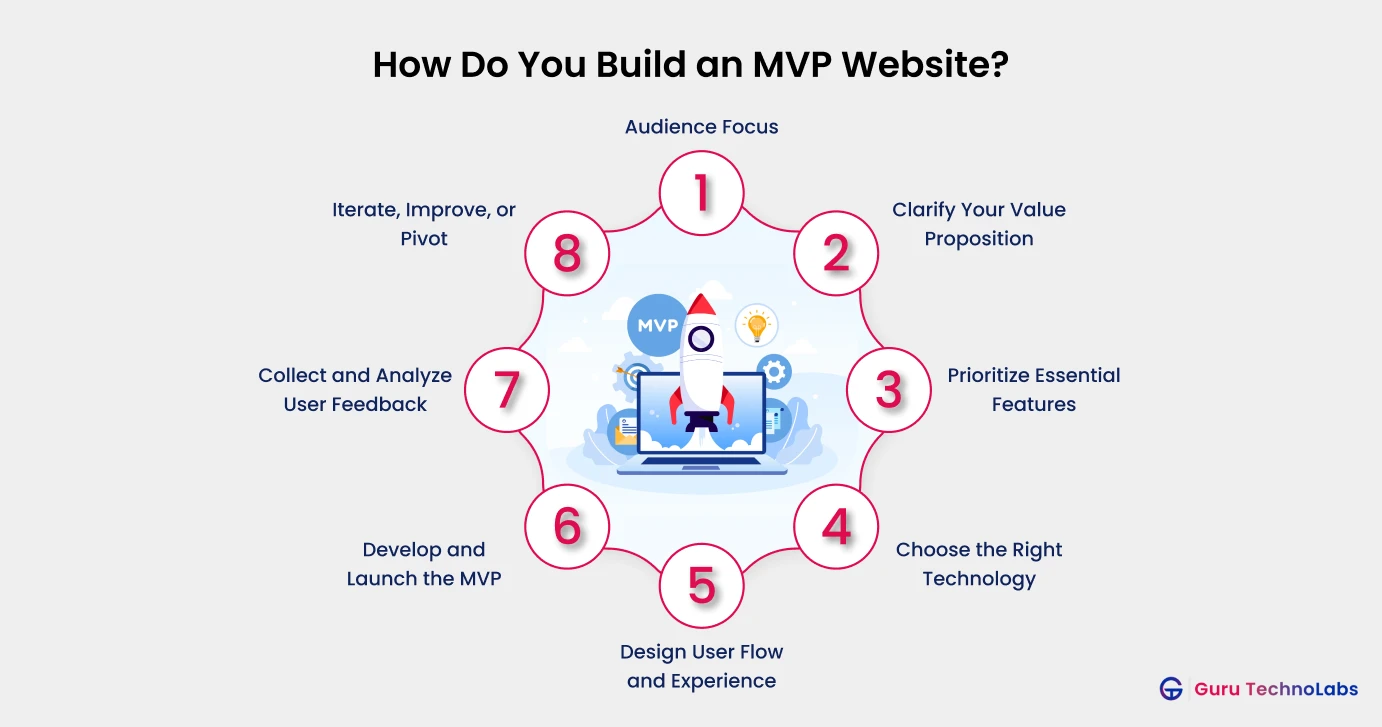
Building an MVP website isn’t just about throwing up a landing page — it’s about strategically validating your idea with a working, real-world solution. Here’s how to do it right:
Before writing a single line of code or designing a single page, you need to know exactly who your website is for. This means creating a detailed profile of your ideal user. Understanding your audience deeply helps you tailor your MVP to solve their real problems and deliver value from day one.
By answering these questions, you create a foundation that guides every decision in your MVP development, ensuring your product is relevant and appealing.
Once you know who you’re building for, it’s crucial to define what makes your website unique and why users should care. Your value proposition is the promise of value you deliver to your users and the primary reason they will choose your site over others.
A strong value proposition not only attracts users but also aligns your team around a common goal.
An MVP is not about building every feature under the sun, it’s about delivering the minimum set of functionalities necessary to validate your idea. Start by brainstorming all possible features, then narrow down to those that directly support your core value proposition.
Use prioritization techniques like the MoSCoW method or the Kano model to objectively decide what to build first.
Selecting the appropriate technology stack is critical for building your MVP quickly and efficiently. Your choices should balance speed, scalability, and cost.
The right tech stack reduces development time and makes future iterations smoother.
A seamless user experience (UX) is essential for your MVP to succeed. Map out the journey from the moment visitors land on your site to completing their desired action.
A well-thought-out UX helps reduce friction and keeps users engaged.
After launch, your MVP’s success depends heavily on how well you listen to your users. Collecting feedback helps you understand what works, what doesn’t, and what users want next.
This data-driven approach ensures your next steps are grounded in real user needs.
Based on the feedback and data collected, decide your next move:
The MVP is just the beginning, continuous improvement is key to long-term success.
By following these steps, you’ll build an MVP website that not only launches quickly but also provides valuable insights to shape your product’s future. This structured approach helps minimize risks, optimize resources, and maximize your chances of creating a product that truly resonates with your audience.
An MVP in web development is the simplest version of a product that meets the core user needs while being functional enough to test with real users. Below are some examples of MVP web development that highlight how basic features can be implemented to validate ideas quickly.
Choosing MVP development is a smart, strategic approach to validate your product idea quickly, minimize risk, and save valuable time and resources. By following the steps outlined above – from understanding your users to building fast and learning faster – you set your project up for real-world success, not just a perfect launch.
At Guru TechnoLabs, we specialize in MVP website development and offer comprehensive MVP development services to help startups and businesses bring their ideas to life. Our team understands the balance between speed, quality, and market needs.
Let’s turn your vision into a launch-ready product. Reach out to us today and take the first step toward building something impactful.

Ravi Makhija is the Founder and CEO of Guru TechnoLabs, an IT services and platform engineering company specializing in Web, Mobile, Cloud, and AI automation software systems. The company focuses on building scalable platforms, complex system architectures, and multi-system integrations for growing businesses. Guru TechnoLabs has developed strong expertise in travel technology, helping travel companies modernize booking platforms and operational systems. With over a decade of experience, Ravi leads the team in delivering automation-driven digital solutions that improve efficiency and scalability.



Share your business needs or project requirements with us & we will get back to you quickly.