
Travel & Tourism

Europe (multi-market)
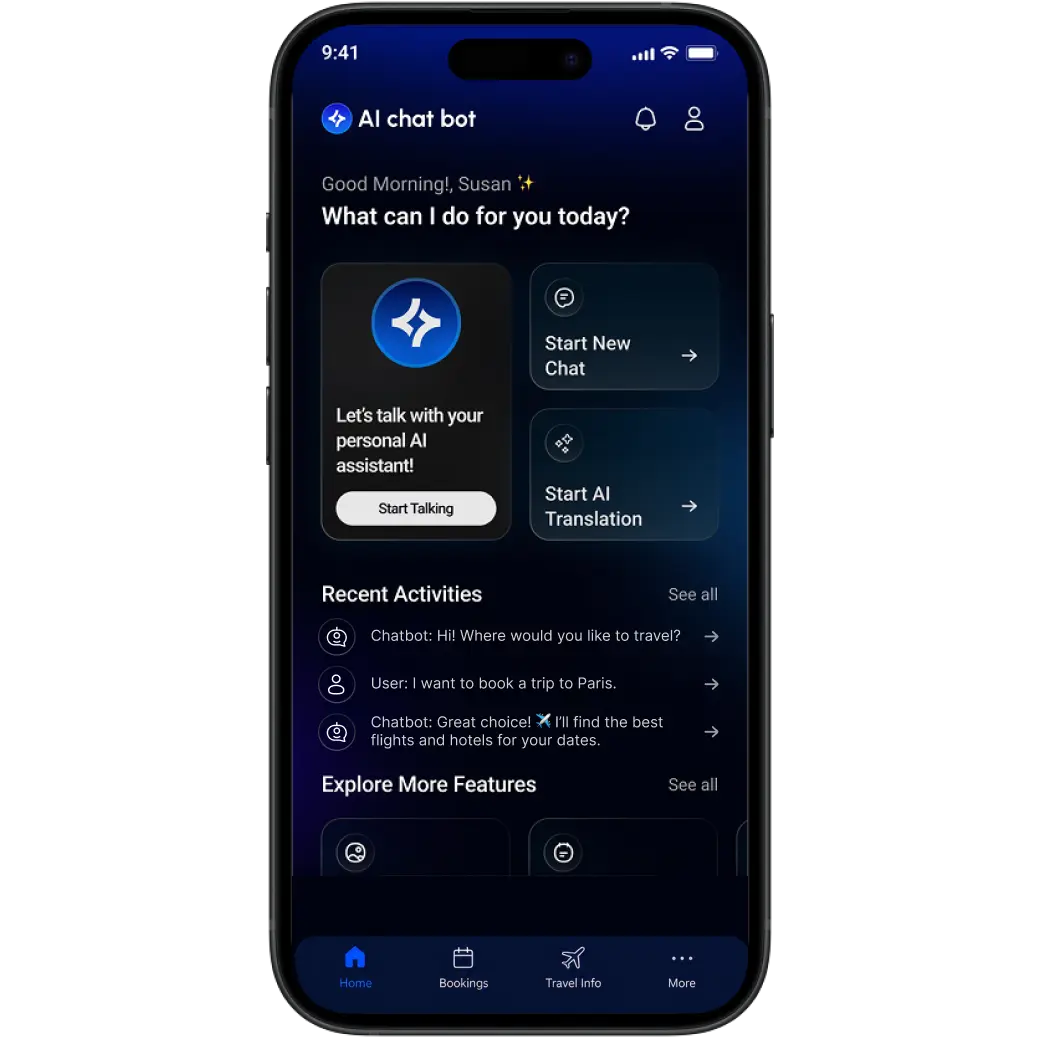






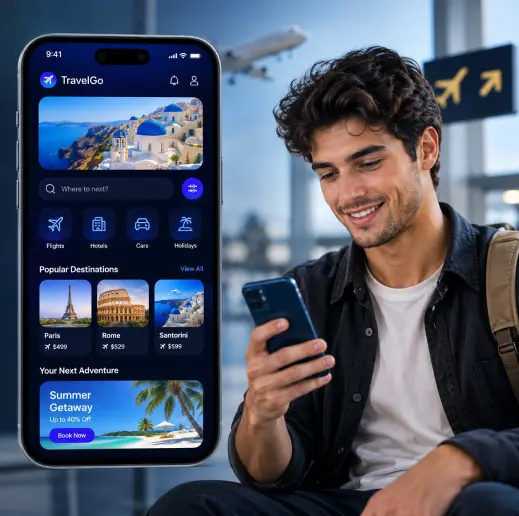
Our client is an established travel company that sells and fulfills bookings through its own online platform, serving travelers across multiple European markets. Rather than a single simple transaction, the company's booking journey involves real choices for the customer: dates, options, pricing tiers, add-ons, and policy details, which makes each booking a considered decision rather than an impulse purchase.
The business operates a direct-to-traveler model, supported by a customer service team that handles pre-booking questions and assistance. With strong booking volume and healthy website traffic, the company had reached the stage where growth was no longer a question of demand. Marketing was working. Traffic was strong. Brand awareness in its core markets was healthy.
The problem sat somewhere less visible: a large share of interested, high-intent travelers were arriving, engaging with booking options, and then leaving without completing a purchase. For a travel company where each booking carries meaningful value, every abandoned booking represented lost revenue and, increasingly, wasted marketing spend. That gap between interest and completed booking is what led the company to us.
The client talked about the goal in business terms rather than technical ones. They weren't after "a chatbot" - they wanted to convert more of the demand they were already paying to attract.
Specifically, the company set out to:
In short, the company wanted to increase conversions and maximise revenue from its existing booking funnel without compromising the seamless, trustworthy experience customers expected.

To identify the root cause of booking abandonment, we looked beyond analytics dashboards and examined the booking journey from the traveler's perspective. This approach uncovered five interconnected challenges that were creating friction, increasing uncertainty, and ultimately preventing users from completing their bookings.

The company's booking flow asked travelers to make several decisions before checkout, comparing options, selecting dates, weighing add-ons, and confirming details across multiple steps. The more valuable the booking, the more decisions stood between interest and purchase. Complexity that felt like "choice" internally often felt like "cognitive overload" to the customer.
The data confirmed the pattern: a large majority of travelers who began a booking never finished it. Critically, most were not dropping off because of price; they were dropping off at moments of uncertainty. Abandonment spiked precisely where a question went unanswered, which told us the issue was confidence, not cost.
High-value travel decisions come with high-value questions. What's actually included in this price? What happens if I need to cancel or change my dates? Are there any travel requirements I should know about? Is availability guaranteed? Traditionally, these questions were answered by phone or email, introducing hours of delay at the very moment a traveler was ready to decide. In that gap, momentum was lost, and often the sale along with it.
The support team was skilled and dedicated, but during peak booking periods they were simply outnumbered. Response times stretched, and a traveler with a single blocking question was left waiting. For a considered purchase, "we'll get back to you tomorrow" often meant a booking that never happened.
Each of these frictions led to the same outcome: qualified, high-intent travelers leaving the platform before purchasing. And because the company's marketing was working well, the cost of every lost booking was effectively doubled the business had already paid to bring those customers in. The abandonment problem was, in effect, a leak at the most expensive point in the funnel.
The pattern was clear. The company didn't have a traffic problem or a pricing problem; it had a confidence problem. Travelers hesitated because they couldn't get the right answer at the right moment.

Rather than adding "another feature," we designed a solution around the root cause we had identified: travelers abandon complex bookings when uncertainty outweighs reassurance.
We built and deployed an AI-powered booking assistant embedded directly into the client's booking journey, present on product pages, comparison screens, and throughout checkout. The guiding principle was simple: answer the traveler's real question at the exact moment it arises, using the company's own accurate, up-to-date information.
What made the assistant effective wasn't that it could "chat," but that it was grounded in the business. It was connected to the client's live availability, pricing rules, booking details, cancellation policies, and travel-requirement data. That meant it could do the things that actually move a hesitant traveler forward:
Crucially, the assistant was designed to complement the client's human team, not replace it. Straightforward, repetitive questions were resolved instantly and around the clock, while genuinely complex or sensitive cases were handed off to human agents with full context so the support team spent its time where its expertise mattered most. This preserved the trusted, personal feel of the brand while removing the delays that had been costing bookings.
By meeting travelers' doubts in real time, the assistant addressed the true cause of abandonment rather than masking its symptoms.
The solution was delivered on a modern, scalable stack chosen for reliability and accuracy at peak booking volumes:
LLM / OpenAI Integration
Vector Database
Python
Node.js
React
PostgreSQL & Redis
Travel & Booking APIs
AWS
Analytics Tooling
Every feature we delivered maps to a concrete business problem. The goal was measurable impact on conversion and customer experience, not breadth for its own sake.
We developed an AI-powered booking assistant that functioned as a virtual travel consultant throughout the customer journey. Whether travellers needed to compare travel options, understand fare rules, check cancellation policies, or clarify booking details, the assistant delivered instant, contextual answers without interrupting the booking flow. By resolving uncertainty at the moment it arose, it reduced drop-offs and moved more travellers toward completed bookings.


To help travellers decide faster and with greater confidence, we introduced an intelligent recommendation engine that surfaced relevant destinations, hotels, flights, and travel packages based on individual preferences, browsing behaviour, and booking history. This eased choice overload and increased the likelihood that each traveller would find options suited to their needs.
Rather than returning generic responses, the assistant recognised where each traveller was within the booking journey and tailored the conversation accordingly. Whether a customer was exploring destinations, comparing itineraries, or reviewing a booking before payment, the guidance stayed relevant, building trust and reducing decision-making friction at every stage.


Many bookings had previously been abandoned simply because travellers could not get timely answers. The AI assistant provided immediate, round-the-clock support, helping customers resolve queries without waiting for a representative. Assistance was always available, regardless of business hours or seasonal demand.
The assistant automated responses to common questions on pricing, baggage policies, visa requirements, payment methods, and booking modifications. Customers received accurate information within seconds, while the client's support team saw a significant reduction in repetitive enquiries, freeing them to focus on more complex requests.


Because the final stages of booking carried the highest abandonment rates, we designed the assistant to guide travellers proactively through checkout. It clarified payment options, travel dates, fare conditions, and optional add-ons, helping customers complete their bookings with greater confidence and fewer interruptions.
When travellers paused or stepped away, the assistant re-engaged them with personalised reminders and contextual guidance drawn from their previous activity. Instead of relying on generic follow-ups, these interactions addressed the specific questions and concerns most likely to be holding a booking back.


To keep the experience consistent, the assistant was made available across multiple customer touchpoints, ensuring travellers received the same standard of support whether they were browsing the website, using the mobile app, or engaging through other supported digital channels.
We built a centralised analytics dashboard that gave the client's team deeper visibility into traveller behaviour across the booking journey. By analysing customer questions, common drop-off points, booking trends, and interaction patterns, the business gained actionable insight to refine both the booking experience and overall conversion performance continuously.

Within the first two complete booking cycles following the launch, the business began seeing measurable improvements across key conversion and customer engagement metrics.
| Business Metric | Before | After |
|---|---|---|
| Website conversion rate | 1.9% | 3.4% (+80%) |
| Booking abandonment rate | 78% | 61% |
| Bookings completed without agent involvement | 41% | 69% |
| Booking-related support tickets | Baseline | -46% |
| Revenue per visitor | Baseline | +74% |
| First response to booking questions | Hours (peak/after-hours) | Under 5 seconds |

“We initially believed booking abandonment could be solved with incremental improvements to the booking experience. Working with this team helped us realise that the real challenge was reducing traveller uncertainty at key decision points. Instead of introducing another support channel, they helped us build an AI booking assistant that delivered the right information at the right moment, making the entire booking journey more intuitive and seamless. Since its launch, we've seen a significant increase in conversions, faster support resolution, and a noticeable improvement in customer satisfaction. More importantly, we've built a scalable solution that continues to improve both the customer experience and our business performance.”
- COO of Travel CompanyBooking abandonment is driven by uncertainty, not just price. Most travellers leave the booking journey because their questions remain unanswered at critical decision points.
Real-time assistance drives higher conversions. Providing instant, contextual support helps travellers make confident booking decisions and significantly reduces drop-offs.
AI delivers the greatest value when it empowers support teams. Automating routine enquiries allows customer service teams to focus on complex, high-value interactions that require human expertise.
Personalisation simplifies complex booking decisions. Tailored recommendations and contextual guidance reduce friction, improve confidence, and create a smoother booking experience.
Customer conversations reveal conversion opportunities. Analysing traveller questions and behaviour uncovers hidden friction points, enabling continuous optimisation of the booking journey.
Sustainable growth starts with optimising the existing funnel. Improving the booking experience and recovering abandoned journeys often generates greater returns than increasing marketing spend.
Every abandoned booking is a missed revenue opportunity. We help travel businesses remove booking friction with AI-powered experiences that turn more high-intent travellers into confirmed customers.
Cutting-edge technology for modern businesses.

Transparent communication and on-time delivery.
Skilled professionals dedicated to your success.
Solutions that drive growth and measurable results.
We have fulfilled the demands of clients working in different industries. For more details, check what our clients say about us.

Israel
We worked with Liron Feigenbaum on a UI/UX and mobile app development proje...

United States
Hi, my name is Tiami. I was looking for an overseas company and found Guru ...

United Kingdom
Hi, I am Doski. I work with Guru TechnoLabs' team and I am very happy...

Australia
We commissioned and adopt a website from Guru TechnoLabs. Website require...
Share your business needs or project requirements with us & we will get back to you quickly.



