Published On:
October 28, 2026Last Updated:
October 28, 2026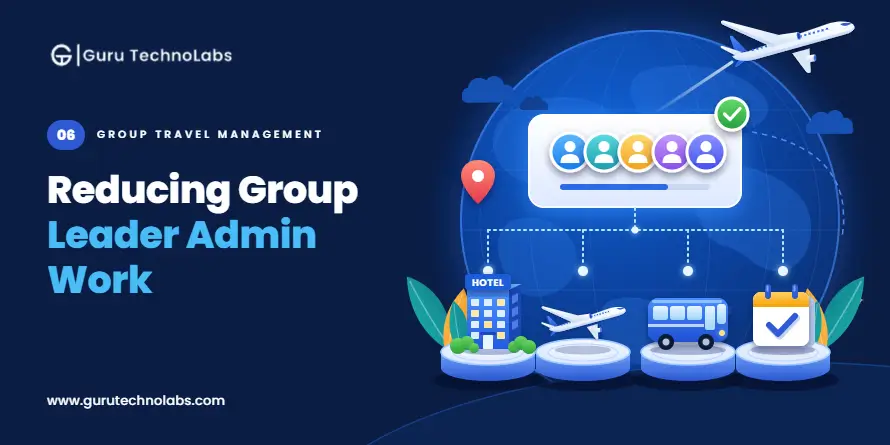
Your group leader is a pastor, a teacher, a club secretary or a department head. They have a job, and this isn't it.
They brought you the group: recruited the travellers, vouched for you personally, and will decide next year whether there's another trip. In return they have become the switchboard. Travellers ask them who has paid and what to pack. You ask them to chase passports and confirm roommates. Neither side is being unreasonable, and the leader is handling both.
This matters commercially, not just relationally. During group season, leader questions can quietly become one of the biggest drains on staff time. And the leader's experience of the admin weighs heavily on whether the group repeats, which, for an operator whose best customers come back every year, is the real asset at risk.
Below: why the admin lands on the leader, how tour operators take it back, and how to run it from one system.
The short answer: the leader is the only person connected to both the travellers and you, and the only one who can't see anything. So every question and every request passes through them.
The travellers know the leader, not you. They signed up because the leader asked them to. When they have a question about their balance, their room or what time the coach leaves, the leader is who they ask, because the leader is who they trust.
You know the leader, not the travellers. When you need something from 140 people, the leader is the only channel that reaches all of them. So you ask the leader.
Both flows converge on a volunteer with no system, no access to your records, and no visibility of what you've already sent.
It's worth naming, because it's usually invisible until the leader complains or quietly declines to run the next trip.
Three of those (information collection, payment chasing and status answering) shouldn't be theirs at all. Rooming legitimately is. The rest sit in between.
On your side: a member of staff interrupted several times a week per live group to look something up and report it back. Across concurrent departures, that's a substantial share of someone's role, spent on questions whose answers already sit in a spreadsheet.
On the leader's side: the thing that decides whether they do it again. A leader who spent six months as an unpaid administrator remembers that more clearly than the trip, and repeat group organisers are the most valuable relationships in group travel.
On both sides: the delay. A traveller's question takes a day or more to route through the leader, to you, and back, and slow answers produce follow-ups.
Almost all of it comes down to one principle: the leader should see status, but shouldn't be the source of it or responsible for acting on it. Most of what the leader does for you exists because they can't see anything. Give them visibility, take back the tasks that are yours, and the asking stops.
What they shouldn't see: other travellers' payment methods, personal details beyond what the group already shares, your costs or your supplier arrangements. Many operators also hide payment amounts and show only paid, due or overdue.
Recruitment. The leader fills the trip because people trust them. No system replaces that, and it's the reason the leader has standing with you.
Repair. If something goes wrong and the leader is embarrassed in front of their group, that's a conversation, usually a senior one. It's why operational errors in group travel cost more than their face value.
For an operator running one group a year, a coordinator who knows the leader handles this well. Once several departures overlap, the interruptions stop being occasional and become the texture of the week.
The obvious fix is a standalone portal. It's rarely the right one. The leader needs live registration, payment and document status, and that data already lives in your group and booking records. A separate portal with its own copy creates a second version to maintain, which is the problem it was meant to solve.
A group travel management system does it from the records your staff already work from:
That's a group leader view built on your existing booking records. Here's how one concert-tour operator built role-based self-service for leaders and travellers, including where it drew the line on what the leader can see.
Within limits, yes. Leaders usually know about a cancellation before you do, and often have a replacement waiting. Let them add and swap travellers up to a cut-off date, with anything after the airline name deadline referred to you, since changes at that point carry costs.
The opposite, in practice. Removing the administrative traffic leaves the relationship conversations, recruitment, planning and next year’s trip, which are the ones worth having. Leaders don’t value being the help desk.
Some will, particularly older leaders in faith groups. Give them the access regardless and keep sending a weekly summary. Over a couple of departures most start checking rather than asking, and the ones who don’t are no worse off than now.
Read more on:
Industries
Ravi Makhija is the Founder and CEO of Guru TechnoLabs, an IT services and platform engineering company specializing in Web, Mobile, Cloud, and AI automation software systems. The company focuses on building scalable platforms, complex system architectures, and multi-system integrations for growing businesses. Guru TechnoLabs has developed strong expertise in travel technology, helping travel companies modernize booking platforms and operational systems. With over a decade of experience, Ravi leads the team in delivering automation-driven digital solutions that improve efficiency and scalability.



Share your business needs or project requirements with us & we will get back to you quickly.