How Much Does It Cost to Develop a Mobile App in 2026? (Complete Cost Breakdown)
Mobile app development costs in 2026 aren’t fixed numbers. Two apps that look similar on the surface can end up with very different budgets. That’s because the cost to develop a mobile app depends on several practical factors, including what the app needs to do, which platforms it runs on, how complex the backend is, and who’s building it.
If you’ve been searching for how much does it cost to develop a mobile app, you’ve probably noticed that most guides throw out wide price ranges without explaining what actually drives those numbers. That makes it hard to plan, especially if you’re a startup founder, an SMB owner, or part of an enterprise team trying to avoid budget surprises.
This guide breaks down the mobile app development cost with practical, real-world clarity. You’ll find:
- Accurate cost ranges by app complexity and platform
- A clear mobile app development cost breakdown by stages
- Region-wise pricing, including the mobile app development cost in USA, UK, UAE, Australia, and India
- Hidden costs many businesses overlook
- Real examples that show where the money actually goes
The goal here isn’t just to answer how much does it cost to build a mobile app, but to help you budget smarter and make decisions that hold up long after launch.
How Much Does It Cost to Build a Mobile App in 2026?
The price of mobile app development is largely determined by its category and the level of innovation required. A simple utility app costs significantly less than a data-heavy enterprise solution.
Cost Overview by App Category
- Simple Apps: $30,000 – $60,000 (Basic UI, standard features like login and profile).
- On-Demand Apps: $60,000 – $120,000 (Real-time tracking, payment gateways, GPS).
- E-commerce Apps: $50,000 – $150,000 (Product catalogs, secure checkout, inventory sync).
- Enterprise Apps: $150,000+ (Complex integrations, high-level security, legacy system sync).
| App Complexity | Estimated Cost Range | Best For |
|---|---|---|
| Simple | $30,000 – $60,000 | MVPs, basic utilities, small business tools. |
| Medium | $60,000 – $150,000 | Marketplace apps, social media, custom dashboards. |
| Complex | $150,000 – $300,000 | High-scale platforms, AI-driven apps, FinTech |
| Enterprise | $300,000+ | Large-scale internal operations, heavy data processing. |
Timeline vs. Cost Snapshot
Generally, the longer the development timeline, the higher the average price to develop an app.
| Project Type | Average Timeline | Estimated Cost |
|---|---|---|
| Basic MVP | 3–4 Months | $30,000 – $50,000 |
| Mid-level App | 6–9 Months | $70,000 – $140,000 |
| Large-scale System | 10+ Months | $200,000+ |
Stop Losing Revenue: App Users Spend 5x More Than Web Users
With the mobile market hitting $391B this year, delaying your build means giving your competitors a head start. Don’t leave your profit behind surge on the table—turn your idea into a high-growth asset today.
Mobile App Cost vs Business Value (What You’re Really Paying For)
When planning a mobile app budget, it’s easy to focus only on upfront development costs. But the price of mobile app development should always be evaluated against long-term business value.
A well-built app can:
- Generate recurring revenue
- Reduce operational costs
- Improve customer retention
- Scale without expensive rework
On the other hand, choosing the lowest average price to develop an app often leads to poor performance, limited scalability, and higher rebuild costs later.
The real question isn’t just how much does it cost to make a smartphone app – it’s whether that cost supports your business goals over time. However, mobile app development trends impact user expectations and cost decisions.
Mobile App Development Cost by App Complexity
Complexity is the biggest driver when calculating how much does it costs to build a mobile app. It involves the number of screens, the intricacy of the logic, and the volume of third-party integrations.
Simple Mobile App Development Cost
A simple app usually includes basic features like email login, a personal profile, and simple data storage. These are often used for informational purposes or internal business tools.
Cost: $30,000 – $60,000.
Medium Complexity App Development Cost
Medium complexity apps include custom UI elements, API integrations (like Google Maps or payment gateways), and a more robust backend. These apps focus on user engagement and retention.
Cost: $60,000 – $150,000.
Complex & Enterprise App Development Cost
These apps are built for scale. They include advanced features like real-time data processing, AI/ML capabilities, complex multi-user roles, and high-level encryption. Enterprise apps often need to integrate with existing ERP or CRM systems.
Cost: $150,000 – $400,000+.
MVP App Development Cost (Quick Overview)
A Minimum Viable Product (MVP) focuses on core features to test your idea in the market quickly and affordably.
Cost: $25,000 – $50,000.
For more detail breakdown, check out our blog on MVP App Development Pricing
Mobile App Development Cost by Platform
Choosing between iOS, Android, or both will significantly impact your final mobile app development cost estimate. Learn more about the mobile app technologies that power native and cross-platform builds.
iOS Mobile App Development Cost
iOS apps are developed using Swift or Objective-C. While Apple’s ecosystem is more standardized, the testing process is rigorous. Development costs for iOS are generally comparable to Android, but the App Store fee and specific hardware requirements add up.
Android Mobile App Development Cost
Android apps are built using Kotlin or Java. Because there are thousands of different Android devices with varying screen sizes and OS versions, the testing phase can take longer, potentially increasing the cost to make a smartphone app by 10-15% compared to iOS.
Cross-Platform Mobile App Development Cost
Using frameworks like Flutter or React Native allows you to build one codebase for both iOS and Android. This typically saves 30% to 40% in overall mobile phone app development cost compared to building two separate native apps.
Which Platform Will Cost You Less to Launch First?
iOS, Android, or cross-platform—choosing the wrong platform can delay launch and inflate costs. Get a platform-specific cost comparison tailored to your app goals.
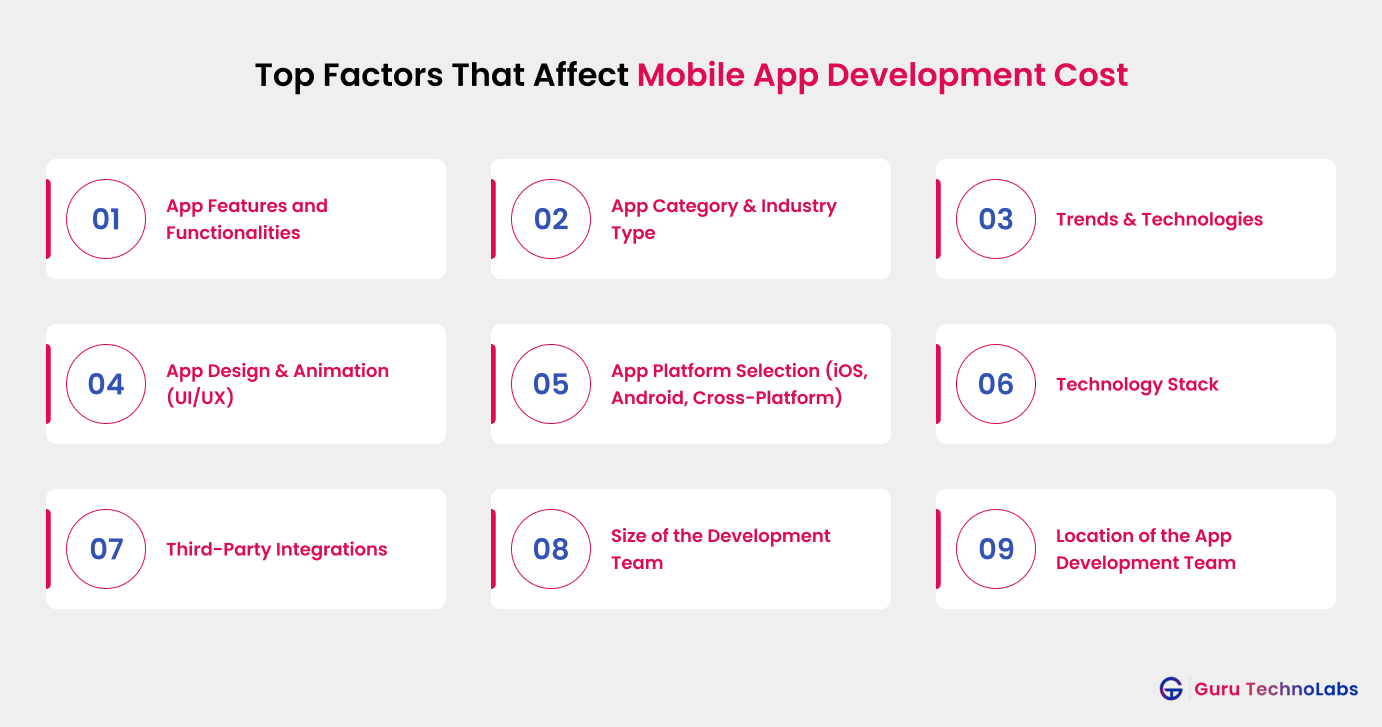
Top Factors That Affect Mobile App Development Cost
Mobile app development costs can vary widely based on the decisions you make throughout the project. Elements like features, technology choices, design depth, and the development team directly influence the final budget. Below are the key factors that have the biggest impact on mobile app development costs and determine how much you should realistically plan to invest
App Features and Functionalities
Features are one of the biggest cost contributors in mobile app development. Core features such as user authentication or push notifications are relatively standard. However, advanced features like live chat, video streaming, offline access, multi-language support, or AI recommendations require custom development and deeper backend integration.
Each additional feature adds design time, development hours, API integration, and testing cycles.
Cost Impact Signal:
App features and functionalities account for a major portion of mobile app development cost, as each additional feature requires design, backend logic, API integration, and quality assurance.
App Category & Industry Type
The type of app and the industry it serves directly affect development cost. For example, healthcare apps require HIPAA compliance, fintech apps need high-level encryption and regulatory checks, and ecommerce apps must support secure payment gateways and inventory management.
Industry-specific compliance, security standards, and integrations increase both development and testing efforts.
Trends & Technologies
Modern apps increasingly rely on emerging technologies such as AI, machine learning, AR/VR, IoT, and blockchain. While these technologies enhance functionality and competitiveness, they also require specialized expertise and longer development cycles.
Apps built using newer frameworks or cutting-edge tools may have higher upfront costs but often offer better scalability and future readiness.
App Design & Animation (UI/UX)
UI/UX design goes beyond visual appeal. It defines how users interact with the app and directly impacts retention and engagement. Basic design templates are cost-effective, but custom layouts, micro-interactions, animations, and accessibility-focused design increase design and front-end development time.
Well-designed apps cost more upfront but reduce usability issues and rework after launch.
App Platform Selection (iOS, Android, Cross-Platform)
Choosing between iOS, Android, or cross-platform development has a major impact on cost. Native apps require separate codebases for each platform, increasing development and maintenance expenses. Cross-platform frameworks like Flutter or React Native allow a shared codebase, reducing initial costs and time to market.
Cost Impact Signal:
Platform selection directly influences mobile app development cost, with native apps requiring separate codebases and higher long-term investment, while cross-platform development can reduce initial costs by up to 30–40%.
Technology Stack
The technology stack includes programming languages, frameworks, databases, and cloud infrastructure. Popular and well-supported technologies often reduce development time due to better tooling and talent availability. In contrast, niche or legacy technologies may increase cost due to limited expertise and maintenance challenges.
Cost Impact Signal:
The chosen technology stack impacts mobile app development cost by affecting development speed, availability of skilled developers, long-term maintenance, and future scalability.
Third-Party Integrations
Many apps rely on third-party services for payments, maps, notifications, analytics, or messaging. While integrations speed up development, they introduce ongoing subscription fees, usage-based costs, and dependency management.
Complex integrations also increase testing requirements and long-term operational expenses.
Size of the Development Team
The number of professionals involved in the project directly affects cost. A typical team includes a project manager, UI/UX designer, frontend and backend developers, and QA engineers. Larger or more complex projects require bigger teams and longer coordination cycles.
Cost Impact Signal:
Development team structure has a high cost impact, as project managers, UI/UX designers, backend developers, and QA engineers all contribute to the total number of billable hours.
Location of the App Development Team
Developer location is one of the most decisive cost factors. Hourly rates vary significantly based on geography due to differences in labor costs, living expenses, and market demand. This is why businesses often compare regions before finalizing a development partner.
Cost Impact Signal:
Developer location is one of the most influential cost drivers, with hourly rates varying significantly between regions such as the USA, Europe, and Asia.
Average Mobile App Developer Hourly Rates by Region
| Region | Average Hourly Rate (USD) | Cost Impact |
|---|---|---|
| USA & Canada | $120 – $250 | Very High |
| Western Europe | $80 – $150 | High |
| Eastern Europe | $40 – $90 | Medium |
| India & Asia | $25 – $60 | Low |
| Australia | $100 – $180 | High |
Why Mobile App Cost Estimates Often Miss the Mark
One of the most common frustrations we hear is that the final cost doesn’t match the original estimate. That usually happens because early estimates are made without full clarity.
Some common reasons include:
- Requirements changing after development starts
- Backend or performance needs being underestimated
- Testing, security, and compliance not planned properly
- No clear plan for post-launch support
A reliable mobile app development cost estimate is based on clear scope, phased delivery, and realistic assumptions not guesswork. When those pieces are in place, cost planning becomes far more predictable.
Are You Accounting for the Cost Drivers Affecting 80–90% of Mobile App Budgets?
Around 80% of mobile app development costs depend on early decisions like features, platform, and scalability. Without clear planning, over 90% of apps go over budget before launch.
Hidden Costs in Mobile App Development You Should Know
When planning your app development project, consider extra expenses that may affect your budget. Here are some important factors to keep in mind.
Ongoing App Maintenance and Support Cost
Expect to spend about 15–20% of the initial development cost annually on maintenance. This covers bug fixes, OS updates, and performance monitoring.
Third-Party APIs, Tools, and Integrations
Many apps rely on external services like Twilio for SMS, SendGrid for emails, or Google Maps. These services often charge monthly or per-usage fees.
Data Storage, Security, and Compliance
Storing user data securely on servers like AWS or Azure requires a monthly subscription. Additionally, ensuring compliance with GDPR or CCPA may require specialized security audits.
Marketing, App Store Optimization, and Promotion
Building an app is only half the battle. You need a budget for App Store Optimization (ASO) and marketing campaigns to ensure users actually find and download your app.
Mobile App Development Cost in the Different Development Stages
To understand what is the average cost of developing an app, look at the percentage distribution across the project lifecycle.
- Planning and Requirement Analysis (10%): Defining the scope, wireframing, and creating the project roadmap.
- UI/UX Design Phase (15%): Creating the visual identity, prototypes, and high-fidelity designs.
- App Development Phase (50%): The core coding of the frontend and backend.
- Testing and Quality Assurance (15%): Finding bugs and ensuring the app works on all intended devices.
- Deployment and App Launch (10%): Releasing the app to the stores and setting up the live environment.
Mobile App Development Cost by Region
The geographic location of your mobile app developers is one of the most influential factors affecting the mobile app development cost per hour.
| Region | Average Hourly Rate (USD) |
|---|---|
| USA & Canada | $120 – $250 |
| Western Europe | $80 – $150 |
| Eastern Europe | $40 – $90 |
| India & Asia | $25 – $60 |
| Australia | $100 – $180 |
How to Reduce Mobile App Development Cost in 2026?
Build an MVP First and Scale Gradually
Launch with the absolute essentials. This allows you to generate revenue or secure funding before building the “nice-to-have” features.
Prioritize Core Features Only
Don’t try to include every possible feature in version 1.0. Focus on the features that solve your users’ primary problems.
Choose Cross-Platform Development
Using Flutter or React Native allows you to reach both audiences for nearly the price of one native app.
Outsource to the Right Development Partner
Outsourcing to regions like India or Eastern Europe offers high-quality code at a fraction of the price of US-based agencies.
Plan Maintenance and Scalability Early
Writing clean, scalable code from day one prevents expensive “technical debt” and costly rewrites later.
How to Choose the Right Mobile App Development Partner
Selecting a right mobile app development partner is as critical as the app idea itself. Your choice will determine your mobile app development cost estimate, the quality of the final product, and the long-term scalability of your business.
Hiring a Local App Development Agency
Hiring an agency in your own city or country offers the benefit of face-to-face meetings and shared time zones. This model is often preferred by large enterprises that require high-touch consulting and local legal accountability. However, it usually comes with a premium price of mobile app development due to higher local overhead costs.
Best For: Projects requiring frequent in-person collaboration and high budgets.
Hire Freelancers
Freelancers are often the most budget-friendly choice for the cost to hire mobile app developer talent. They are ideal for small, isolated tasks or quick bug fixes. However, relying on a freelancer for a full-scale project carries significant risks, including limited accountability, potential availability issues, and the lack of a full team (Design, QA, PM).
Best For: Simple apps, MVPs with limited features, or minor updates.
Hire In-House Development Team
Building an in-house team for app development will give you complete control over the development process. You have a dedicated team working exclusively on your project.
All the team members will have close contact and seamless communication. You can rest assured that your team has the necessary skills and experience to deliver a high-quality app. But it is an expensive option to hire a group of people to complete the task.
The average cost of application development is around $16,000 to $48,000. However, building an in-house team will cost you around $500,000 annually, and it differs depending on the size of the team and every new employee you hire.
You also need to maintain the team’s salary, taxes, accounting costs, office space, and maintenance.
Outsource App Development Company
Outsourcing with an established mobile app development company like Guru TechnoLabs offers a balanced and scalable approach. You gain access to a cross-functional team of experienced UX designers, developers, and QA specialists without the long-term overhead of building an internal team. This model helps optimize the overall app development investment while maintaining strong governance, delivery standards, and consistent quality.
Best For: SMBs and enterprises seeking high quality, scalability, and cost-efficiency.
How Much Should You Budget for App Development in 2026?
Let’s be real: there isn’t a “magic number” for app costs. If someone gives you a flat quote before hearing your idea, run. The truth is, your budget depends entirely on the problem you’re solving, the devices your users carry, and how big you’re dreaming.
Simple apps with limited features cost less, while complex or enterprise-grade apps require a higher investment—but they also support scale, performance, and long-term stability. Planning ahead, validating ideas with an MVP, and choosing the right development approach can help you avoid unnecessary spending.
Rather than chasing the lowest mobile phone app development cost, focus on building something that lasts. Clear requirements, smart technical decisions, and the right development partner make a bigger difference than cutting corners.
In 2026, successful app projects aren’t just about spending less—they’re about spending with purpose.
Frequently Asked Questions
Most apps take between 3 to 9 months. Simple MVPs can be ready in about 12 weeks, while complex enterprise platforms with custom backends may require a year or more of development and testing..
Budget for 15% to 20% of your initial development cost. If your app costs $100,000 to build, expect to spend $15,000 to $20,000 per year on updates, security, and bug fixes.
Yes. Due to lower living costs, Indian developers offer high-quality services at $25-$60 per hour, which is significantly lower than the $150+ rates found in the US or UK.
The best way is to start with an MVP and use cross-platform frameworks like Flutter. This reduces development time and code volume without sacrificing user experience or app performance.
The number of features, the complexity of the design, and the geographic location of your development team are the three most significant factors that determine your total project budget.
The mobile app development cost in the UK ranges from £40,000 to £150,000+. Hourly rates in London and major hubs typically fall between £80 and £180.
The mobile app development cost in UAE usually falls between AED 80,000 and AED 400,000. Enterprise solutions in Dubai can exceed AED 600,000 depending on the level of bilingual support and security.
The mobile app development cost in the USA is the highest globally, often starting at $80,000 for simple apps and reaching $250,000+ for complex systems, driven by high labor costs.
The mobile app development cost in Australia ranges from AUD 70,000 to AUD 300,000+. Local agencies typically charge AUD 150–250 per hour.
The factors affecting the cost of hiring mobile app developers include their level of expertise, the complexity of the tech stack required (like AI or Blockchain), and whether they are local or offshore.
Maintenance involves hosting ($50-$500/mo), security updates, and OS compatibility. Yearly, this usually totals about one-fifth of your original cost to hire mobile app developer fees.