How Much Does Custom Software Development Cost in 2026? A Buyer’s Estimation Guide

Table of Contents
- Quick Answer: How Much Does Custom Software Development Cost?
- What Actually Drives Custom Software Development Cost?
- Estimate Your Custom Software Cost: The 5-Input Method
- Custom Software Development Cost by Software Type
- Software Development Cost by Industry
- Custom Software Development Cost by Feature
- Custom Software Cost by Team Model & Region
- The 3-Year Total Cost of Ownership (TCO) of Custom Software
- Hidden Costs of Custom Software Development
- How to Reduce Custom Software Development Cost (Without Sacrificing Quality)
- Does AI Actually Lower Custom Software Development Cost?
- Is Your Software Quote Fair? How to Read & Validate an Estimate
- Final Thoughts
- Frequently Asked Questions
Most cost guides answer one question: “What’s the average price of custom software?” This guide answers the question you’re actually asking: “What will my project cost, and how do I know if a quote is fair?”
If you’re holding a proposal, planning a budget, or comparing two vendors, a range alone won’t help you decide. Below you’ll find the current 2026 numbers, the factors that move them, a simple method to estimate your own project.
Quick Answer: How Much Does Custom Software Development Cost?
Custom software development typically costs between $30,000 and $500,000+ in 2026. The final number depends on how complex the system is, how many features and integrations it needs, and where your development team is based, not simply on how many screens it has.
Here’s the fast version before we go deeper:
- A basic app or MVP software usually costs $30,000–$80,000 and takes 3–6 months.
- A mid-level business platform with integrations and multiple user roles costs $80,000–$200,000 and takes 6–12 months.
- An enterprise-grade system with heavy integrations, strict security, and large-scale architecture costs $200,000–$500,000+ and takes 12+ months.
- The single biggest cost driver is feature complexity, not feature count. Ten simple screens are cheaper than one real-time analytics engine.
- The real number is your Total Cost of Ownership, not the build price. Over three years, maintenance, hosting, and improvements often push your true spend to roughly 1.5×–2× the initial build cost.
The global software market is projected to reach roughly US$779 billion in revenue in 2026, with enterprise software alone accounting for about US$334 billion. That sustained growth is why more businesses are commissioning custom builds every year and why understanding what actually drives the price is worth the ten minutes this guide takes.
Custom Software Cost Snapshot: Basic vs Mid-Level vs Enterprise
Use this table as your anchor for the rest of the guide. Every section below refers back to these three tiers.
| Tier | Typical cost (USD) | Typical timeline | What it includes | Best for |
|---|---|---|---|---|
| Basic / MVP | $30,000 – $80,000 | 3–6 months | One core workflow, limited features, single platform, standard UI | Validating an idea, internal tools, first product version |
| Mid-Level | $80,000 – $200,000 | 6–12 months | Multiple user roles, several integrations, dashboards, custom UI | Scaling startups, SMBs, SaaS with real users |
| Enterprise | $200,000 – $500,000+ | 12+ months | Advanced architecture, high security, heavy integrations, scale | Large operations, regulated industries, high-traffic platforms |
What Actually Drives Custom Software Development Cost?
Custom software cost is driven mainly by different metrics, the engineering effort behind the screens, not the number of screens. Two apps that look identical can cost very differently because of what happens in the background. Here are the seven factors that decide your number, in roughly the order they affect the budget.
Project Scope & Requirement Clarity
A clear, well-defined scope is the cheapest thing you can bring to a project and vague scope is the most expensive. Scope is the full set of features, workflows, and system boundaries your software will have. When it’s defined upfront, estimates are accurate and the build stays on budget. When it isn’t, requirements shift mid-project, work gets redone, and costs climb.
Unclear requirements and mid-build changes are one of the most common reasons software budgets overrun. This is why a proper discovery phase, where goals, users, and workflows are documented before coding starts, usually pays for itself by preventing rework later. If a vendor is ready to quote a fixed price without asking detailed questions about scope, treat that as a warning sign, not a convenience.
Feature Complexity
What raises cost is how complex each feature is, not how many features you list. A login form, a static page, and a contact form are cheap because the logic is simple and well-understood. A real-time chat system, a recommendation engine, or a financial calculation module is expensive because it needs custom logic, heavy testing, and careful handling of edge cases.
A useful way to think about it: count the decisions your software has to make, not the buttons a user can press. Simple features (forms, profiles, basic search) sit at the low end of any estimate. Complex features (real-time updates, AI logic, automated workflows, large-data processing) can each cost more than a handful of simple screens combined. When you trim a budget, trim complexity first, it moves the number far more than removing a page or two.
Third-Party Integrations
Integrations are one of the most underestimated cost factors, and they can add 20–30% to a project on their own. Every time your software has to talk to an outside system, a payment gateway, a CRM, a mapping service, an analytics tool, an AI API that connection has to be built, tested, and maintained.
Some integrations are quick because the outside system is well-documented and stable. Others are slow and unpredictable because the documentation is poor, the system is old, or the data has to be reshaped to fit. A single messy integration with a legacy system can cost more than several clean ones. When you request a quote, list every external system your software must connect to integrations left off the initial scope are a frequent source of “surprise” cost later.
Security & Compliance Requirements
Security is a required cost, not an optional upgrade and in regulated industries it can be one of the largest line items. Basic authentication and encryption are part of every project. Beyond that, systems that handle money, health data, or personal information need deeper protection: role-based access, secure APIs, audits, penetration testing, and vulnerability scanning.
Compliance adds another layer. Standards like GDPR (privacy), HIPAA (healthcare), PCI DSS (payments), and SOC 2 (enterprise SaaS) each require extra documentation, controls, testing, and ongoing audits. If your product touches a regulated space, budget for compliance from day one, retrofitting it after the build is far more expensive than designing it in.
Also Read: Payment Integration With Resolving PCI Compliance, Multi-Currency, Fraud Prevention
Scalability & System Architecture
Scalability decides how well your software handles growth and paying for it upfront is cheaper than re-engineering later. Architecture is the blueprint for how your system’s parts fit together. A simple web or mobile app for a few hundred users needs far less architectural planning than a platform expected to serve millions.
Building for scale means investment in the right structure, cloud infrastructure, load balancing, and caching. It raises the initial cost, but skipping it is a false economy: software that wasn’t built to scale usually has to be partly rebuilt once it succeeds, which costs more than doing it right the first time. The honest answer for most projects is to build for realistic near-term growth, not hypothetical millions over-engineering is its own kind of waste.
Team Composition & Developer Seniority
Who builds your software is the single largest line in the budget, because most of the cost is people’s time. A typical project involves some mix of a project manager, business analyst, UI/UX designer, frontend and backend developers, and QA engineers. The exact mix and the seniority of the people in it, drives the price.
Senior engineers charge more per hour but often finish faster and make fewer costly mistakes, while junior-heavy teams look cheaper on paper but can need more supervision and rework. The right answer is a balanced team matched to the work: seniors on architecture and hard problems, mid-level and junior developers on well-defined tasks. Be wary of quotes staffed with more people than the project needs, over-staffing is a known tactic for inflating a total.
Technology Stack
The technology stack affects both what you pay to build and what you pay to maintain for years afterward. A modern, widely-used stack (for example React, Node.js, Python, and mainstream cloud services) tends to lower long-term cost: it’s faster to build with, easier to scale, and easier to hire for. A niche or outdated stack can raise cost and lock you into a small, expensive talent pool.
The stack matters more than most buyers expect, because its effects compound. A well-chosen stack keeps future maintenance, hiring, and scaling affordable. A poor one adds hidden cost every year the software runs. If a vendor recommends an unusual technology, ask them to explain the long-term hiring and maintenance implications, not just the build.
Estimate Your Custom Software Cost: The 5-Input Method
You can produce a realistic ballpark estimate yourself with five inputs, before you ever contact a vendor. This won’t replace a professional estimate, but it will tell you whether a $50,000 idea is really a $200,000 idea, and it will help you sanity-check the quotes you receive.
How to Estimate Custom Software Development Cost (Step-by-Step)
Work through these five inputs in order.
Input 1: List your core features. Write down only the features needed for the first usable version. Group them as simple (forms, profiles, basic search), medium (dashboards, admin panels, role management), or complex (real-time features, analytics, AI, payments).
Input 2: Assign rough hours by complexity. Use working ranges: simple features 40–120 hours each, medium 120–300 hours each, complex 300–800+ hours each. Add up your total estimated hours.
Input 3: Count your integrations. Add roughly 40–120 hours per third-party integration, more for old or poorly-documented systems. Integrations are the input buyers most often forget.
Input 4: Choose a team model and blended rate. Pick a region and use a blended hourly rate from the region table below, for example $120–$200 (North America), $70–$130 (Western Europe), $40–$80 (Eastern Europe / Latin America), $25–$55 (Asia). Multiply your total hours by this rate.
Input 5: Add a risk buffer. Add 10–20% for the unknowns every project has (scope changes, edge cases, integration surprises). This gives you a realistic range, not a single false-precision number.
- The formula: (total feature hours + integration hours) × blended rate × (1 + risk buffer) = your estimate range.
If your result lands far from a vendor’s quote in either direction, that gap is exactly the conversation worth having before you sign.
Custom Software Development Cost by Software Type
Cost varies by software type because each type demands a different depth of workflow logic, integration, and scalability. Below are typical 2026 ranges for the most commonly requested systems. Where a system spans a wide range, it’s because customization and integration depth vary hugely from one business to the next.
CRM Software Development Cost
A custom CRM typically costs $50,000–$150,000+, depending on how deeply it’s tailored to your sales process. A straightforward contact-and-pipeline system sits at the lower end. Cost rises with sales-pipeline customization, workflow automation, advanced reporting dashboards, and integrations with email and marketing tools. The more your CRM has to mirror your specific way of working, the higher it goes,which is usually also what makes it worth building custom instead of buying off the shelf.
Our Project
ERP Software Development Cost
Custom ERP systems are among the most expensive, typically $100,000–$400,000+. The cost comes from scale and interconnection: multiple modules (finance, HR, inventory, operations), data kept consistent across departments, strict reliability and security requirements, and complex integrations. ERP cost grows sharply with the number of departments and workflows it has to unify, which is why enterprise ERP projects sit firmly in the top tier.
SaaS Platform Development Cost
A full SaaS platform typically costs $15,000–$400,000+, driven mainly by architecture and scale rather than surface features. The expensive parts are underneath: multi-tenant architecture (many customers on one secure system), subscription and billing logic, analytics dashboards, and cloud infrastructure that scales cleanly.
Marketplace Development Cost (Uber-like, Airbnb-like Examples)
Marketplace platforms typically cost $50,000–$300,000+ because they’re really two products in one, a buyer side and a seller side. An Uber-like or Airbnb-like platform needs matched workflows for both sides, payments and payouts, ratings and trust systems, and often real-time features like availability or location tracking. Cost scales with transaction volume and the reliability the two-sided model demands. A basic marketplace MVP can launch at the lower end; a high-traffic, real-time platform reaches the top of the range.
Booking & Inventory Software Cost
Booking and inventory systems typically cost $40,000–$120,000, depending on how much real-time logic they need. For booking software, cost is driven by availability and scheduling logic, payment integration, notifications, and connections to calendars or supplier systems. For inventory software, the drivers are real-time stock tracking, multi-location management, supplier integrations, and automated alerts or forecasting. Both get more expensive as real-time accuracy becomes more critical to the business.
Software Development Cost by Industry
What separates the cost of one industry from another is the specific compliance rule or integration each sector can’t avoid. The table below shows typical 2026 ranges by tier, and the notes under it explain each sector’s main cost driver.
| Industry | Typical cost range (USD) |
|---|---|
| Healthcare | $60,000 – $400,000+ |
| Fintech | $60,000 – $400,000+ |
| Travel | $50,000 – $350,000+ |
| Logistics | $60,000 – $350,000+ |
Healthcare Software Development Cost
In healthcare, the most expensive work is the part users never see. A clean interface might take weeks; making a healthcarer app that HIPAA-compliant, encrypting patient records, and wiring it into hospital EHR/EMR systems through standards like HL7 or FHIR is where the budget actually goes, a single EHR integration can cost as much as a small feature build on its own. Add audit logging, access controls, and the reliability a clinical setting demands, and you’re carrying overhead that a comparable app in another industry simply doesn’t.
What drives the cost up in healthcare:
- Compliance: HIPAA (and GDPR outside the US) – documentation, controls, audits
- Integrations: EHR/EMR systems via HL7 or FHIR standards
- Security: patient-data encryption, audit logging, role-based access
Fintech Software Development Cost
Fintech costs more because the price of getting it wrong is higher. A bug in most apps is an annoyance; a bug in a payment or ledger system is lost money, a broken audit trail, or a regulator’s attention, so the engineering is built to a stricter standard throughout. Payment processing, fraud protection, PCI DSS compliance, and secure integrations with banking APIs all add build cost.
But the quieter cost driver is testing. Financial software demands far more rigorous QA than a typical product, which is why quality assurance eats a noticeably bigger slice of a fintech budget than most founders expect.
Travel Software Development Cost
A travel platform is really an integration project wearing a booking app’s clothes. The visible booking flow is straightforward; the cost lives in everything it has to reliably connect to, flight and hotel inventory through GDS APIs, supplier systems, payment gateways, and an admin layer to manage it all.
Here’s the key: cost scales with the number of systems the platform must talk to, not the polish of the design. Each new supplier or data source you plug in adds build and testing effort. The more moving parts you connect, the higher the price and the more the reliability of those connections becomes the whole product.
Also Read: Travel Booking Engine Development Cost
Logistics Software Development Cost
Logistics software is judged by whether the data is right at 2 a.m., which is why it costs what it does. The features that matter all depend on a backend that stays fast and accurate under constant, heavy load:
- Real-time shipment tracking across the whole network
- Fleet and route optimization to cut fuel and delivery time
- Warehouse-management integrations that keep stock data in sync
Because these systems typically run around the clock and at scale, the investment shifts away from the interface and toward the architecture holding it all up. Here, reliability isn’t a nice-to-have you can trim to save money, it’s the feature the whole operation is paying for.
Custom Software Development Cost by Feature
These are costs to build or integrate each capability as part of a larger application. Building any one of these as a standalone product, a custom payment gateway, or a messaging platform of its own.
| Feature | Typical cost (USD) | What moves it up |
|---|---|---|
| User authentication | $3,000 – $15,000 | Role-based access, MFA, SSO, enterprise security |
| Dashboard | $6,000 – $25,000 | Real-time data, large datasets, advanced visualizations |
| Admin panel | $5,000 – $20,000 | User/role management, audit logs, system configuration |
| Search | $4,000 – $15,000 | Full-text search, smart filtering, relevance ranking |
| Payment integration (Stripe, PayPal, etc.) | $5,000 – $20,000 | Subscriptions, multi-currency, PCI-compliant handling (building a custom gateway is a separate, much larger project) |
| In-app chat (via SDK) | $8,000 – $30,000 | Real-time infrastructure, presence, media, video calling |
| Notifications | $2,000 – $8,000 | Multiple channels, scheduling, personalization |
| Reporting & analytics | $10,000 – $40,000 | Real-time analytics, exports, high-volume data |
| API integration (each) | $3,000 – $15,000 | Poor documentation, complex auth, data transformation |
The pattern is consistent: the more real-time and data-heavy a feature is, the more it costs. Simple, well-understood features are where you save; complex, data-intensive features are where budgets are won or lost.
Custom Software Cost by Team Model & Region
Your team model and their location often change the total more than the feature list does. The quick version: match the model to your project instead of chasing the lowest rate.
- In-house: maximum control, high fixed cost (salaries, benefits, overhead). Best when software is your core, long-term product.
- Outsourcing: variable, project-based cost and faster starts. Best for defined projects and skills you don’t have in-house.
- Dedicated team: a fixed group billed per developer per month; the middle ground. Best for long-running products, where the team’s growing knowledge of your system reduces waste over time.
- Offshore / nearshore / onshore: offshore can cost 40–70% less than onshore for similar skill. The saving is real if managed well; offshore projects that fail usually fail on communication, not coding skill, so invest in clear scope and a single point of contact.
Software Developer Hourly Rates by Region (2026)
Rates range from about $25/hour in parts of Asia to $200+/hour in North America for comparable senior talent, differences consistent with Stack Overflow’s 2025 Developer Survey of 49,000+ developers. Weigh rate against time-zone overlap and management effort, not in isolation.
| Region | Typical hourly rate (USD) | Notes |
|---|---|---|
| North America | $100 – $200+ | Highest rates; easiest oversight for US clients |
| Western Europe | $70 – $130 | Strong engineering standards, GDPR familiarity |
| Eastern Europe | $40 – $80 | Skilled talent, strong value for complex builds |
| Latin America | $40 – $85 | Nearshore option with good US time-zone overlap |
| Asia (India, etc.) | $25 – $55 | Lowest rates; manage communication carefully |
The 3-Year Total Cost of Ownership (TCO) of Custom Software
The build price is only part of what custom software costs, over three years, your true spend is usually 1.5×–2× the initial build. Software isn’t a one-time purchase; it’s a system you run, maintain, and improve. Budgeting only for the build is the most common reason businesses feel “surprised” by cost later. The real number to plan around is Total Cost of Ownership.
What TCO Includes Beyond the Build
TCO adds hosting, maintenance, third-party fees, and ongoing improvements to the original build cost. Here’s a realistic three-year example for a mid-level platform with a $150,000 build. The exact numbers vary, but the shape is consistent across most projects.
| Cost component | 3-year estimate | Notes |
|---|---|---|
| Initial build | $150,000 | One-time |
| Cloud hosting & infrastructure | ~$18,000 | Grows with usage (~$500/mo scaling up) |
| Maintenance (~15–20%/yr) | ~$75,000 | Bug fixes, updates, security patches |
| Ongoing improvements / new features | ~$40,000 | Changes based on real user feedback |
| Third-party licenses & API fees | ~$11,000 | Usage-based; grows with scale |
| Approx. 3-year TCO | ~$294,000 | 2× the build cost |
The takeaway isn’t that software is more expensive than you thought, it’s that the build is a down payment, not the full price. Planning for TCO upfront lets you choose a scope you can afford to run, not just afford to launch. It also reframes cost-cutting: shaving the build budget by skipping quality work often raises TCO, because poorly-built software costs more to maintain.
Hidden Costs of Custom Software Development
The most common hidden costs are ongoing maintenance, hosting, security updates, third-party fees, and scaling and together they often equal or exceed the original build over time. They’re “hidden” only because build-focused budgets leave them out. Naming them upfront is the difference between a plan and a surprise.
- Maintenance: typically 15–20% of the build cost per year, covering bug fixes, updates, and compatibility.
- Hosting & cloud infrastructure: grows with usage – storage, bandwidth, and monitoring all scale as you grow.
- Security updates: ongoing and essential, especially for fintech, healthcare, and enterprise systems.
- Third-party service fees: payment gateways, APIs, and data services usually bill by usage.
- Licensing: SaaS tools and components often charge more as your team and usage grow.
- Scaling: infrastructure upgrades and performance work when the product succeeds and traffic climbs.
None of these are avoidable, but all of them are plannable. The businesses that stay on budget are simply the ones that budgeted for these from the start, which is exactly what the TCO section helps you do.
How to Reduce Custom Software Development Cost (Without Sacrificing Quality)
You can meaningfully lower cost through smart scoping and prioritization, but cutting the wrong things (discovery, architecture, QA) raises your long-term cost through rework. The goal isn’t to spend less; it’s to spend where it creates value and save where it doesn’t. Here are four proven ways to do that.
Start With an MVP
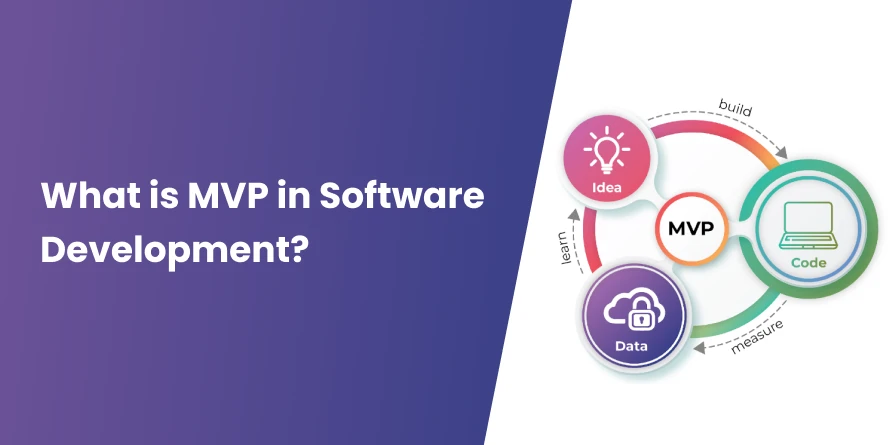
Building a Minimum Viable Product first is the most effective way to control cost and risk. An MVP focuses on the core features that prove your idea works, instead of paying to build everything before you know what users actually want. You launch faster, spend less upfront, and most importantly, you let real user feedback decide what to build next, rather than guessing. The most common expensive mistake is trying to ship every feature in version one; a focused MVP avoids it.
Prioritize High-Value Features First
Not every feature earns its cost, so build the ones that drive revenue or core value first and defer the rest. A simple exercise: for each feature, ask whether it directly serves your main business goal. The ones that do are worth building now; the “nice to have” ones can wait for a later phase, once the product is earning and you have real usage data to justify them. This keeps the initial budget lean without weakening the product’s core.
Choose the Right Team Model
Matching the team model and region to your project stage saves more than simply hiring the cheapest developers. An early-stage MVP may be well-served by a nimble nearshore or offshore team; a complex, long-running platform may justify senior onshore leadership over a distributed build team. The cheapest hourly rate is not the cheapest project if it leads to miscommunication and rework. Decide based on your project’s complexity, communication needs, and how much oversight you can provide, the team-model section covers the trade-offs.
Reuse Proven Components & APIs
You don’t need to build everything from scratch, reusing proven components and APIs cuts cost without cutting quality. Standard, well-solved problems like authentication, payments, maps, and notifications can often be handled with established services and libraries instead of custom code.
However, that frees your budget for the features that are genuinely unique to your business, the parts that actually justify building custom software in the first place. Custom where it matters, proven components where it doesn’t, is how experienced teams keep quality high and cost sensible.
Does AI Actually Lower Custom Software Development Cost?
AI-assisted development can speed up parts of a project, but it isn’t an automatic discount and in some areas it raises cost. This is worth being honest about, because a lot of 2026 marketing overstates it. Here’s the balanced picture.
AI coding tools genuinely help with repetitive work: boilerplate code, tests, documentation, and straightforward tasks.
On the right work, they can reduce effort noticeably. But the productivity gain is more debated than the marketing suggests, a controlled study by the research nonprofit METR found that experienced developers were not automatically faster with AI tools, and even the researchers note the real effect is hard to measure precisely.
AI-generated code still has to be reviewed by experienced engineers for correctness, security, and architectural fit and that review takes real time.
The hard, expensive parts of software (complex business logic, architecture, security, enterprise integrations) still depend heavily on skilled people. So AI tends to compress timelines and increase value per dollar rather than deliver a flat cost cut across the board.
Adding AI features to your product is a separate question, and it usually adds cost. Depending on complexity, AI features can increase development cost by roughly 20–60%: a basic chatbot is a modest add, while custom models, recommendation engines, or generative AI carry significant cost in data pipelines, model work, and cloud computation. The practical takeaway: treat AI as a tool that can improve efficiency and product value, not as a coupon and be skeptical of any quote that promises large savings “because of AI” without explaining where.
Is Your Software Quote Fair? How to Read & Validate an Estimate
A fair quote is detailed, transparent, and built on questions about your scope, a risky one is a round number delivered without them. This is the section most cost guides skip, and it’s the one buyers need most. You don’t need to be technical to judge a quote; you need to know what a good one contains and what the warning signs are.
Warning Signs in a Software Development Quote
The clearest warning sign is a confident fixed price given without detailed questions about your scope. No one can accurately price software they haven’t understood, so a quote that arrives fast and cheap with no discovery is usually a quote that will grow later. Other red flags to watch for:
- A single round number with no breakdown by feature, phase, or role, you can’t validate what you can’t see.
- No discovery or requirements phase in the plan, meaning scope will be defined during the build, when changes are most expensive.
- A team that seems over-staffed for the work, extra roles that inflate the total without adding value.
- Vague scope language (“full app,” “complete system”) instead of a specific feature list.
- A price far below every other quote is usually a sign that something has been left out and will reappear as “extra” cost later.
What a Legitimate Estimate Should Include
A trustworthy estimate breaks the work down so you can see where every dollar goes. At minimum, look for:
- A clear feature list matching what you asked for, with anything excluded stated explicitly.
- A breakdown by phase or feature, not one lump sum, discovery, design, development, testing, deployment.
- The team composition and roles included, so you can judge whether it fits the work.
- A stated pricing model (fixed price, time-and-materials, or dedicated team) and what each means for you.
- A realistic timeline and an honest note on assumptions and risks.
- What happens after launch, maintenance, support, and how changes are handled.
An estimate that includes these isn’t just more trustworthy; it’s a sign the vendor actually understands your project.
Final Thoughts
Custom software cost varies widely, but the number that matters is rarely the one on the first quote, it’s the total cost of building, running, and improving software that genuinely fits your business.
If you take one idea away, let it be this: treat cost as a decision, not a sticker price. The factors in this guide, complexity, integrations, team model, and the hidden costs that show up after launch, are all levers you can control once you understand them. The clearer you are about what you actually need, the more accurate every quote you receive becomes, and the less likely you are to overpay for scope you didn’t require or underspend on quality you did.
When you’re ready to turn a rough budget into a real plan, a good custom software development services partner will start exactly where this guide does, with your goals and scope, not a number and give you a transparent, itemized estimate you can actually evaluate.
Frequently Asked Questions
Software companies estimate cost by breaking your system into features, estimating the effort for each, and applying their team's rates plus a buffer for unknowns. The typical process is: a discovery or requirements phase to understand scope, feature decomposition (splitting the system into parts), effort estimation for each part, resource planning (team size and seniority), a pricing-model choice (fixed, hourly, or dedicated team), and a risk buffer. Accurate estimates always depend on scope clarity — which is why serious vendors ask a lot of questions before quoting. You can run a simplified version of this yourself with the 5-input method.
Timelines scale with complexity: roughly 3–6 months for an MVP, 6–12 months for a mid-level product, and 12+ months for an enterprise platform.
Ongoing maintenance typically costs 15–20% of the original build cost per year. It covers bug fixes, security patches, updates, performance monitoring, and small improvements. Regulated systems (healthcare, fintech) and fast-growing products can run higher.
In most cases, no. Genuine custom software usually starts around $30,000. Under $10,000 realistically covers no-code or low-code prototypes, very small single-feature tools, or early proof-of-concept builds. Those can be smart first steps to validate an idea cheaply, but a fully custom product with real features, integrations, and proper testing needs a larger budget. If a vendor offers full custom software for a few thousand dollars, look closely at what's actually included.
AI features typically add 20–60% to development cost, depending on how advanced they are. A basic AI chatbot is a modest addition. Predictive analytics adds more. Custom models, recommendation engines, and generative AI are the most expensive, because the cost sits in data pipelines, model training, and cloud computation, not just the code.