Published On:
June 29, 2021Last Updated:
October 14, 2026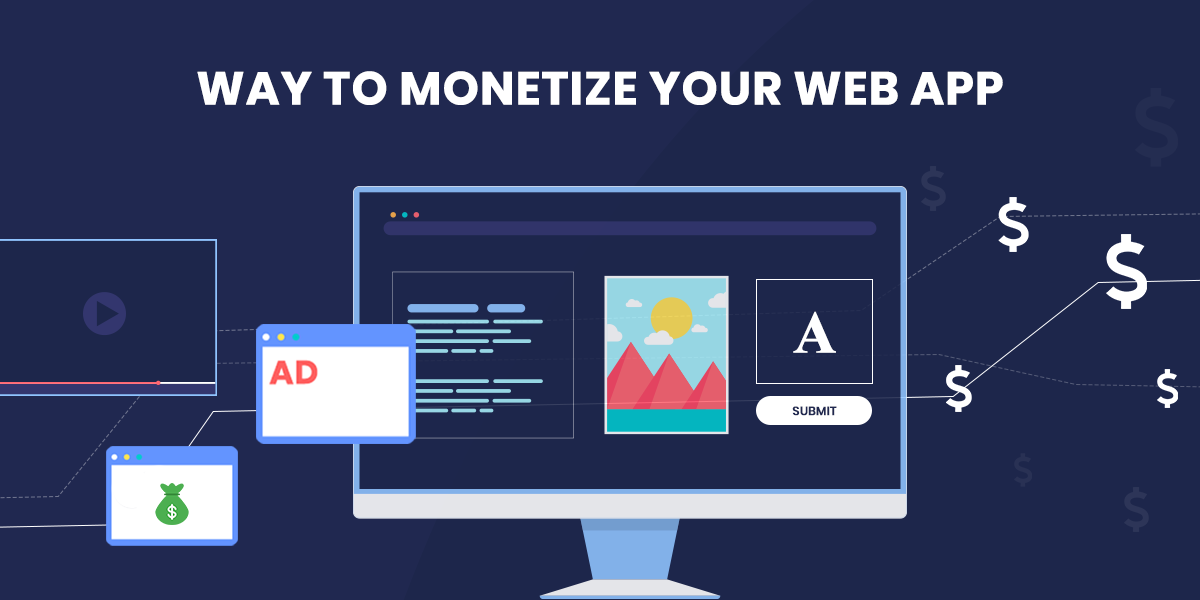
In today’s fast-paced digital world, web applications have become an essential component of businesses of all sizes. Entrepreneurs, business owners, marketers, and investors are always looking for innovative and effective ways to generate revenue from their digital products. One of the most effective approaches is implementing a web app monetization strategy, which can include options such as advertising, subscriptions, freemium models, or in-app purchases — all tailored to your audience and business goals.
However, finding the right method to monetize a web app can be difficult. Whether you are building a new app or enhancing an existing one, understanding the ways to monetize a web app or website effectively is crucial. The goal is to turn your application into a sustainable source of income while maintaining a smooth and engaging user experience.
We have worked on many web applications, integrating both individual and hybrid monetization methods in our clients’ apps to help them generate revenue. Being an experienced web app development company, we have compiled the most effective monetization approaches that cater to different app types and target audiences.
So in this blog, we will explore the different ways to generate revenue from your web application, including strategies to monetize your website or app through ads, subscriptions, or premium content, and turn it into a profitable venture.
Before discussing strategies in-depth, it’s important to understand who your target audience is and what they are looking for. Knowing what your audience wants and needs will help you choose the most effective monetization model and ensure the success of your web app.
Knowing what your audience wants and needs will help you choose the right monetization strategy and ensure the success of your web app.
Who can take benefit of these monetization methods?
Now, let’s move on to understanding web app monetization.
A web app is a software program that runs on a web server and can be accessed through a web browser. Unlike native applications that need to be installed on a device, web apps are platform-independent and can be accessed from any device.
A few popular examples of web apps are Facebook, Google Docs, and Amazon. Check out more PWA examples to gain a better understanding of this technology.
Monetizing a web app means converting a user base into a sustainable and profitable source of income. However, choosing the right strategy depends on several factors, including types of web application, target audience & market trends.
There are various ways to monetize a web app, such as advertising, subscriptions, freemium models, in-app purchases, and more, which we will explore in detail in the following sections.
Before that, let’s get brief information on why monetizing web apps is important.
Here are some key reasons/benefits why monetization is important for web apps:
Before you decide which monetization strategy will work best, you need to know the cost of developing, designing, and maintaining your web app to ensure that you generate a healthy return on investment.
Once you have a clear understanding of web app development costs, you can explore these best monetization methods for your target audience & achieve your business goals.
Here are 7 proven ways to monetize your web app in 2024.
Advertising is a popular monetization method for web apps, which involves displaying ads on the app, typically in the form of banners or pop-ups, and generating revenue through clicks or impressions.
To monetize an app with ads effectively, businesses can integrate ad networks like Google AdSense, AdMob, or Media.net. These networks deliver relevant ads to users automatically, and revenue is earned whenever users view or click on them. Choosing the right ad formats, placing them strategically within the app, and targeting the appropriate audience are key factors to maximize revenue while maintaining a smooth user experience.
Types of Advertising
There are several different types of advertising, including:
One of the most notable examples of a web app that successfully uses the advertising model for monetization is BuzzFeed.
BuzzFeed, a popular digital media company, uses different types of ads on its website and app to make money. They strategically place display ads, seamlessly integrate native ads into content, and create sponsored content to monetize their platform without compromising user experience.
However, BuzzFeed frequently showcases sponsored content made in partnership with brands, giving advertisers the opportunity to connect with BuzzFeed’s large audience in a subtle way. Moreover, BuzzFeed uses display ads and native ads in its content areas to generate more revenue.
Pros of Advertising
There are several advantages to using advertising as a monetization strategy for web apps, including:
Cons of Advertising
Let explore the real world example that will help you to understand the advertising model more accurately.
Top Platform to Use Advertising
Google Ads (formerly Google AdWords)
Google Ads is a robust advertising platform that enables businesses to showcase ads on Google’s search engine results pages. It also provides access to a wide range of partner websites and apps through the Google Display Network. Using Google Ads, you can reach your desired audience by targeting specific keywords, demographics, interests, and more.
Facebook Ads
Facebook Ads allows businesses to create customized advertisements that are displayed in users’ Facebook feeds, Instagram feeds, Messenger, and other areas within the Facebook ecosystem. (However, Facebook cover all its service under the Meta franchise name) You can target users according to their specific location, interests and many more metrics.
Monetization Strategies for Advertising Model
When integrating ads into a web apps, it’s crucial to keep several key principles in mind to ensure a positive user experience and maximize monetization potential.
Placement of Ads
Ad placement is an important aspect that helps to maximize revenue while also keeping users engaged and happy. Here are a few tips to optimize ad placement:
Ad Targeting
Ad targeting is another important aspect of advertising on web apps. With this, you can increase user relevance and improve click-through rates. Here are a few tips for effective ad targeting:
However, In last Make sure the user experience is the top priority. Ads should load fast, not disrupt navigation or site functions, and be easily recognizable to avoid accidental clicks.
Need More Information on Advertising?
The freemium monetization method involves offering your app a basic version for free. It will charge users for additional features or functionality. This model allows users to try out your app before committing to a purchase while providing a revenue stream for your business.
Pros of Freemium Model
Cons of Freemium Model
Implementation Tips for Freemium Monetization Model
Need More Information on The Freemium Model?
In a Subscription-based model, the company charges its users a recurring fee at regular intervals for accessing the product or service of a web app. It is mostly used for web apps that offer ongoing value or content, such as news sites, productivity tools & entertainment platforms.
Know how to enhance the user experience by incorporating latest web development trends into your web app offering ongoing value or content.
Different Types of Subscription Plans
Payment gateways allow businesses to process payments from customers & manage recurring billing cycles seamlessly. The most popular payment gateways are PayPal, Authorize.Net, Stripe & more.
While choosing a payment gateway for subscription payments, businesses should consider various factors such as ease of integration, security & support. Also check web application vulnerabilities before to ensure user data remains secure.
Todoist is an example of the subscription-based monetization model. It is a well-known app for managing tasks and boosting productivity. Users can make to-do lists, set reminders, and categorize tasks. The app offers a premium subscription that provides more advanced options.
It operates on a subscription-based model, where users pay a monthly or annual fee to access premium features and benefits.
Pros of Subscription-based Model
Cons of Subscription-based Model
Strategies to Implement the Subscription-based Model
When implementing a subscription-based model, here is the some of the tips you should consider.
Prioritize Value Propostition
One of the key elements of successfully implementing a subscription-based model is to ensure that your users understand the value they’ll receive in exchange for their subscription.
Communicate the benefits and features of your subscription plan on your website. Highlight what sets your subscription apart from free alternatives or one-time purchase options. Whether it’s exclusive content, access to premium features, or enhanced convenience, make sure your users see the value in subscribing.
Provide Flexible Pricing Options
Not all users have the same needs or budget constraints, so offering a variety of subscription tiers or pricing plans can help attract a wider range of customers. Consider offering different levels of access or features at varying price points to cater to different segments of your audience.
Additionally, providing flexible billing options such as monthly, quarterly, or annual subscriptions can make it easier for users to choose a plan that fits their budget and usage patterns. Just make sure to clearly outline the differences between each plan so users can make an informed decision.
Pro TipYou can also create hybrid monetization models by combining one or more methods. You can talk with our experts if you want to know more about it.
In-App purchases mean users can make purchases within a web application. This monetization method has become increasingly popular among app developers and publishers, allowing them to generate revenue directly from their users. In-App purchases, such as virtual goods, premium content, or subscription services, can take different forms.
Types of In-App Purchases
An excellent example of a web application that effectively utilizes the in-app purchase monetization model is Canva. Canva is a graphic design platform that offers a wide range of tools and templates for creating professional-quality designs, including social media graphics, presentations, posters, and more.
Canva offers a premium subscription known as Canva Pro. It provides users with access to additional features and resources. It also allow users have access to a larger library of premium templates, stock photos, illustrations, and icons, allowing them to create more diverse and polished designs.
Pros of In-App Purchases
Cons of In-App Purchases
Tip for In-App Purchase Model
Identify Valuable Virtual Goods or Features
To implement this model successfully, it’s crucial to identify what virtual goods or features are valuable to your users and enhance their experience. Conduct thorough market research and user feedback analysis to understand what users are willing to pay for.
Whether it’s unlocking premium content, accessing exclusive features, or purchasing virtual currency or items, focus on offering items that provide tangible value to your users.
Don’t forget to check out best practices to follow for web application security.
Need Help to Decide In-App Purchase Plans?
Pay-per-use is a monetization method where users pay every time they use a specific feature or service within a web app. It’s a transaction-based model where users must pay for the usage, time, or specific actions they require.
One of the best examples of the pay-per-use monetization method is the video-on-demand services like Amazon Prime Video and Google Play Movies. It allows users to rent or purchase individual movies or TV show episodes on a pay-per-view basics.
Users can stream the content for a set time by paying a single fee, usually lasting between 24 to 48 hours. This approach provides users with flexibility and options, enabling them to enjoy specific content without the need for a subscription.
Pros of Pay-per-use monetization method
Cons of Pay-per-use monetization method
Let’s discuss some of the implementation tips for your web application project that surely help to decide to go for.
Implementation Tips for In-App Purchase Model
Clearly Define Usage Parameters: Transparency is key in the pay-per-use model. Clearly define the usage parameters to help users understand what they’re paying for and avoid confusion. Whether it’s the number of actions, data usage, or time spent using a feature, make sure users have a clear understanding of how their usage is measured and billed.
To be transparent will surely help to build trust with your users. Communicate the pricing structure, including any applicable fees or taxes, upfront to avoid surprises.
Set Value-based Pricing: When implementing pay-per-use pricing, it’s essential to set pricing that reflects the value of the feature or service being provided. Avoid overcharging by conducting market research to understand what users are willing to pay for the specific service or feature
Offer Flexible Billing Options: To accommodate different usage patterns and budgets, offer users flexible billing options. Allow users to choose from various payment frequencies, such as per hour, per action, or per usage threshold.
Want to Know, When Should You Use Pay-per-use?
Affiliate marketing is a strategy where a web app earns a commission by promoting a product or service from another company. The web app promotes its users, and if a user purchases through its referral link, it earns a commission.
Types of Affiliate Marketing
CouponUSA is a platform designed specifically for the USA market, offering a comprehensive database of digital coupons, deals, and discounts for online and offline retailers across the United States. Simply, this web app promotes the other products to their website.
Pros of Affiliate Marketing
Cons of Affiliate Marketing
Monetization Strategy of Affiliate Marketing
Identify Relevant Affiliate Programs: Start by identifying affiliate programs that are relevant to your web application and align with your target audience’s interests and needs. Example: if your web app is related to the technical niche then find the affiliate networks and individual programs within technical products.
Look for reputable merchants with attractive commission rates, high-quality products, and strong brand reputations to maximize your earning potential as an affiliate marketer.
Integrate Affiliate Links Seamlessly: Integrate affiliate links seamlessly into your web application’s content to enhance the user experience and improve conversion rates. Make sure to avoid using overly promotional language or intrusive ads that could discourage users.
Instead, naturally incorporate affiliate links into relevant content like product reviews, recommendations, or tutorials.
Disclose Affiliate Relationships: It is important to be open and honest with your audience regarding your affiliate partnerships. Make sure to disclose any financial benefits or commissions you receive from promoting affiliate products or services.
Always prioritize honesty and integrity in your recommendations, and only endorse products or services that you truly believe will be beneficial for your audience.
Sponsorship is a monetization method where a web app receives financial support from a sponsor in exchange for promoting the sponsor’s brand, product, or service to its users. It leads to increased brand visibility and exposure to the web app’s user base.
Types of Sponsorship
However, the Coursicle web application work as the Sponsorship monetization method. It is a web application that helps users discover online courses based on their interests and goals.
Targeted users of coursicle is to take online courses for professional development, personal enrichment, or academic pursuits. They sponsors the online course providers, educational institutions, and companies offering professional certifications.
Pros of Sponsorship Method
Cons of Sponsorship Method
Sponsorship App Monetization Strategy
Identify Potential Sponsors: Start by identifying potential sponsors that align with your web application’s niche, target audience, and brand values. Look for companies or brands that share similar interests, demographics, or goals with your audience.
Create Compelling Sponsorship Packages: Create attractive sponsorship packages that provide real advantages and worth to potential sponsors. Tailor sponsorship packages to match sponsors’ marketing goals and financial limitations.
Offer Targeted Brand Integration: Offer sponsors opportunities for branded content, product placements, sponsored features, or co-branded campaigns that resonate with your audience and align with sponsors’ marketing objectives.
Provide Data-driven Insights: Demonstrate the effectiveness of sponsorship opportunities by providing data-driven insights and analytics to sponsors. Provide sponsors with regular reports and performance updates to demonstrate the value they’re receiving from their investment and identify areas for optimization and improvement.
The monetization model that’s best for you depends on your web app’s niche and what kind of value you offer users. Each option has its own benefits:
We hope you understand a brief idea about monetizing a web app. To monetize a web application successfully, choosing the right strategy that aligns with the application’s objectives and user experience is essential. However, this can be challenging, and expert guidance is often necessary.
With our expertise in web app development & years of experience working in this field, we have recommended these best monetization methods available for web apps. However, the choice of method depends on the web app’s goals, target audience, and content. To evaluate it efficiently, you can Contact Us. We will guide you toward the strategic approach to maximize revenue and user satisfaction.
The amount you can earn varies based on your niche, traffic, and how you choose to make money. By using advertising, you could make $1,500 – $4,000 per month with 500,000 monthly page views.
To quickly start earning money, I suggest monetizing your web app through advertising and in-app purchases. This will help you generate income promptly. However, Focus on user engagement and consistently deliver value to drive revenue growth swiftly.
It depends on your app’s nature and target audience. Google AdMob, Stripe, and Shopify’s app store all provide different ways to make money. Look at what each platform offers, how much they charge, and if they work well with your app. Make sure to choose the option that can grow with your app and adapt to changes.
You can monetize your website by displaying ads, adding affiliate links, selling premium memberships, or offering digital products. The best method depends on your content type and target audience. For example, blogs work well with ads and affiliate programs, while service websites benefit from subscriptions or premium upgrades.
A web app monetization strategy is a structured plan that defines how your web app or website will generate income. It could include ads, subscriptions, in-app purchases, or affiliate marketing. The goal is to align your monetization method with user experience and business objectives.
Read more on:
Web
Ravi Makhija is the Founder and CEO of Guru TechnoLabs, an IT services and platform engineering company specializing in Web, Mobile, Cloud, and AI automation software systems. The company focuses on building scalable platforms, complex system architectures, and multi-system integrations for growing businesses. Guru TechnoLabs has developed strong expertise in travel technology, helping travel companies modernize booking platforms and operational systems. With over a decade of experience, Ravi leads the team in delivering automation-driven digital solutions that improve efficiency and scalability.



Share your business needs or project requirements with us & we will get back to you quickly.