Top 12 Healthcare Technology Trends for 2026 and Beyond
Table of Contents
Healthcare is not merely evolving, but it is speeding up. In a few years, technologies that were considered experimental have taken root in mainstream clinical and operational practices.
- AI-based triage systems are now operating in hospitals.
- Clinicians are remotely monitoring the patient’s vitals via wearable devices on a dashboard.
- And genomic treatments that were previously limited to research laboratories are being given to real patients.
However, it is not as easy as it may seem to keep up with these changes. Budgets are under discussion, regulations are on the increase, and interoperability remains a thorn in the flesh; knowing what technology trends are worth pursuing, and which are still years off reasonable implementation, is a competitive edge in its own right.
This guide disaggregates the most significant healthcare technology trends that are defining 2026. You will discover the key drivers, real-life examples, related information, and real-world examples to assist you in gauging where to make your investments and planning.
Why 2026 Is a Defining Year for Healthcare Technology
Several forces are coming together to ensure that 2026 is a truly transformational year, not a mere incremental one.
Digital health investment is also increasing globally, and the digital health market is already exceeded $660 billion by 2025 and accelerate throughout the decade.
Meanwhile, workforce shortages are compelling health systems to seek ways to close the gaps by looking to automation and remote care.
The World Health Organization estimates that there will be a shortage of 10 million health workers worldwide by 2030, so the implementation of technology is not only helpful but operationally mandatory.
Regulatory systems are also becoming of age. New rules about interoperability, AI regulations, and data privacy are giving organizations clearer guidance on how to use technology responsibly. This reduces confusion and makes it easier for them to adopt new technologies with confidence.
This creates a special window when the technology is available, the regulatory landscape is more transparent, and the business case for investing in digital health has never been better.
Top 10 Healthcare Technology Trends for 2026
As we have already entered 2026, the momentum of innovation and intelligence continues across all sectors, and healthcare is not immune. From improving diagnostic systems to personalization to telehealth, so much is happening in healthcare.
Here are some of the emerging healthcare technology trends for 2026 that are making headlines and shaping the future of healthcare.

1. Artificial Intelligence in Clinical Decision-Making
Artificial intelligence is already far beyond experimental status. By 2026, AI in healthcare will actively integrate into diagnostic processes, risk prediction software, and clinical records, providing quantifiable gains in speed, precision, and clinician workload.
AI algorithms are on par with, or outperform, specialist accuracy in detecting diabetic retinopathy, pulmonary nodules, and some types of cancer in radiology.
The AI model in Google Health showed that its breast cancer memogram was more accurate than that of human radiologists, as measured by important metrics in multicenter trials. The systems are not substitutes for clinicians; they provide a potent second opinion, minimize missed diagnoses, and shorten time-to-diagnosis.
One of the least recognized uses is probably in documentation. Studies have consistently shown that clinicians spend 30-50% of their time on administrative work rather than on patient care. The AI-driven ambient documentation systems that record during consultations and generate structured clinical notes are already alleviating part of this burden by freeing up clinicians’ time and reducing burnout rates.
Major areas of use: Diagnostic imaging analysis, clinical decision support, predictive readmission models, NLP-based documentation, and AI-assisted drug interaction screening.
2. Telehealth Expansion and Remote Patient Monitoring (RPM)
Telehealth has transitioned from an emergency response during the pandemic to a permanent component of modern healthcare delivery models. It has established itself as a primary care delivery model, especially for chronic illnesses, behavioral health, and regular consultations.
The most rapidly developing element of this space is Remote Patient Monitoring (RPM). RPM enables proactive intervention for patients before they get worse by linking continuous data streams from wearable devices and home-based sensors to clinical teams.
Research indicates that RPM initiatives for conditions such as heart failure and COPD can decrease hospitalization rates by 25-40 percent, thereby improving outcomes and reducing costs.
The functionality of virtual care platforms is advancing rapidly. Through AI in telemedicine, it is becoming possible to perform smart triage, automatic symptom analysis, and real-time risk stratification before a virtual visit commences, enabling clinicians to devote their attention to where it is most needed.
The consultation efficiency and diagnostic confidence improvement are being reported by the providers who are incorporating AI in their telehealth stack.
What to plan: RPM platforms need to be integrated with EHRs, have coherent clinical processes for alert management, and train staff to respond effectively to continuous streams of data. The choice of platforms based on strong interoperability standards (e.g., HL7 FHIR) would initially prevent costly future migrations.
3. IoT-Enabled Healthcare Infrastructure
The Internet of Things encompasses all smart infusion pumps and related connected imaging equipment, as well as environmental sensors within the clinical space. The market size of Healthcare IoT is expected to increase to 260 billion dollars in 2027, up from about 90 billion dollars in 2022.
In practice, the IoT is enabling real-time tracking of assets, automated monitoring of sterile environments, and continuous patient monitoring without a nurse at the bedside. The emergence of the Internet of Medical Things (IoMT) is one of the greatest progressions, but it is more specifically concerned with a set of connected medical devices.
Such devices produce huge amounts of data on a patient, which, when used correctly, can provide a predictive viewpoint that could not have been accomplished a decade ago. The most important issue in IoT deployments is security. Any interconnected device is a target of a cyberattack.
Companies that have been expanding their connected device infrastructure must invest concomitantly in network segmentation, device authentication, and monitoring capabilities.
Read More: The Usage of IoT in Healthcare Applications
4. Advanced Wearable Health Technology
Consumer wearables have hit a milestone. Gadgets that used to count steps can now read ECGs, blood oxygen saturation, skin temperature, and even blood sugar levels, providing clinical-grade data in a consumer-friendly form factor.
This poses an opportunity and a challenge for health systems in operation. The opportunity is abundant longitudinal patient information, which enhances chronic disease care, early intervention, and personalized care plans.
The question is how to incorporate that data into the clinical workflow in a meaningful way without bombarding the providers with noise.
Organizations that are most progressive are not only gathering wearable data but creating AI models trained on that data to produce actionable clinical alerts, instead of just raw measures that clinicians have to interpret manually.
Major development: Wearable sensors are increasingly integrated into fabric and soft materials, making long-term monitoring more comfortable and even improving patient compliance.
Healthcare app development is an essential competency to consider at an early stage of the process by teams designing patient-facing monitoring devices or companion apps with wearable devices.
5. Generative AI and Large Language Models in Healthcare
The technology behind large language models, known as generative AI, is arguably the most disruptive technology set to impact healthcare in 2026. It can be used in anything patient-related (communication and clinical summarization) to drug discovery and protocol generation.
The applications of generative AI in clinical practice include summarizing patient histories from unstructured patient notes and discharge summaries, responding to patient queries with intelligent virtual assistants, and guiding clinical teams through complex treatment regimens. In select environments, early pilots are reducing documentation time by 30-60%.
AI models are dramatically reducing the timeline of drug development in pharmaceutical research. Molecules that would have previously required years to discover and test are being modeled and prioritized in months, and regulatory agencies already reviewed many AI-assisted drug applications.
Governance matters here. Organizations must have policies regarding output review, bias auditing, data privacy, and liability before implementing generative AI in clinical pathways. The technology is strong, but it needs proper controls in place to be implemented safely.
6. Blockchain for Health Data Security and Interoperability
The digital economy is no exception: patient data is among the most sensitive and targeted types of information.
The annual average cost of a data breach is about 10 million dollars in healthcare organizations, which is the highest across any industry, as per the IBM report on the Cost of a Data Breach.
- Blockchain technology can solve a fundamental structural issue in health data management: providing a dataset that is both accessible to many parties, tamper-proof, and auditable.
- Blockchain can facilitate the secure distribution of patient records among providers by providing a decentralized ledger of transactions that can fail only once.
In addition to its security benefits, blockchain is demonstrating potential in claims processing, pharmaceutical supply chain integrity, and consent management, providing patients with a way to have their data audited and to determine who can access it and why.
The adoption is in its infancy, yet organizations that invest in interoperability infrastructure are advised to consider blockchain-supported elements and more conventional methods, especially when data sharing across organizations is a prerequisite.
7. Smart Hospitals and Intelligent Infrastructure
A smart hospital concept combines IoT, AI, cloud computing, and advanced analytics into one operational space. The desired outcome is a care environment that is actively self-optimizing – predicting the needs of patients, acting proactively on their resources, and minimizing friction to staff and patients.
This, practically, translates to automated patient flow management to decrease the emergency department wait times, predictive maintenance of critical medical equipment, automated bed management using AI, and intelligent supply chain management that averts shortages prior to their happening.
According to Deloitte research, smart hospital investments can decrease operational costs by 15-25 percent and increase patient satisfaction scores. The infrastructure demands a huge initial investment in infrastructure connectivity, data integration, and staff change management – but ROI is normally realised in 2-4 years.
8. Digital Therapeutics (DTx) and Precision Medicine
Digital therapeutics are clinically validated computer programs used to treat, manage, or prevent medical conditions.
Unlike general wellness applications, digital therapeutics (DTx) are regulated clinical interventions supported by validated clinical evidence. They have been introduced to treat such conditions as Type 2 diabetes, ADHD, insomnia, addiction, and mental health disorders.
The value proposition is also quite attractive: scalable, isotonic interventions that can be prescribed to accompany or replace traditional interventions and be continuously monitored and adjusted in real time.
- In cases where health systems are dealing with large populations of patients with chronic diseases, DTx enables them to reach a larger clinical population at a cost disproportionate to staff costs.
- The broader principle behind this trend is precision medicine, which treats patients based on their genetic, environmental, and lifestyle characteristics rather than the general population means.
CRISPR and other gene editing technologies are currently in their infancy in clinical use, but are already proving successful in practice for treating previously incurable genetic disorders. To meet the needs of organizations seeking to deploy digital therapeutic programs or precision medicine tools via mobile channels, the quality of the underlying healthcare application development will directly affect patient engagement and the reliability of clinical data.
Healthcare apps that are developed with regulatory and accessibility standards in mind are considerably more effective than modified consumer applications.
9. Cybersecurity as a Core Clinical Priority
Healthcare cybersecurity is not an issue of IT anymore, but a patient safety problem.
Hospital ransomware attacks have postponed surgeries, disrupted medication dispensing, and, in reported instances, led to poor patient outcomes.
The digital adoption has increased dramatically with the attack surface. All EHR systems and interconnected devices, telehealth platforms, and cloud services will be vectors. In 2024- 2026, the rate and the level of sophistication of attacks on healthcare providers have greatly increased.
A successful approach to cybersecurity in 2026 needs zero-trust network architecture, an inventory and monitoring of every device, phishing training of staff, incident response planning with clinical operations consideration, and penetration testing by third parties.
Priority action: Conduct an in-depth medical device security audit. Connected device security has a considerable number of blind spots in many organizations, and this is both a clinical and regulatory risk.
10. Cloud Computing and EHR Interoperability
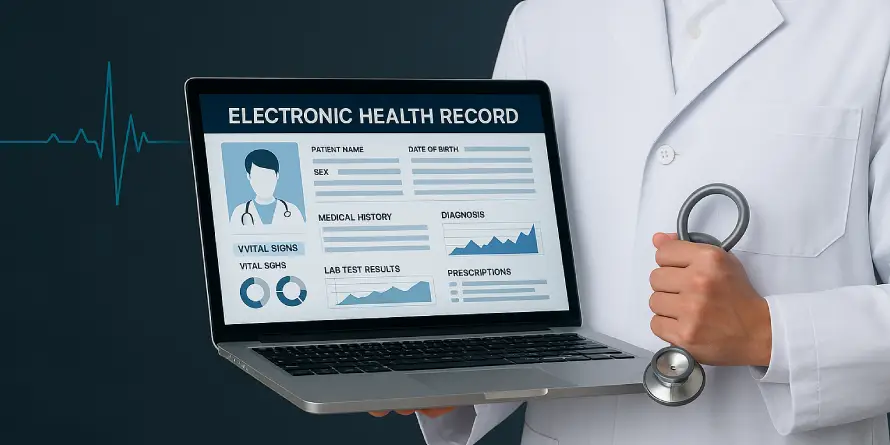
Healthcare IT is now driven by cloud computing. The rapid shift to on-premises infrastructure is driven by scalability, cost efficiency, business continuity, and support for advanced analytics workloads.
However, the larger strategic change is interoperability.
The movement towards FHIR (Fast Healthcare Interoperability Resources) standards and open APIs is finally making sensible data exchange between disparate systems feasible. Fragmented data is still one of the largest barriers to the management of population health, care coordination, and the development of AI models.
Companies that have invested in interoperability infrastructure not only to comply with laws but also as a strategic asset are developing the database on which all future AI and analytics investments will rely.
Key Challenges Organizations Must Plan For
The successful adoption of any of these technologies relies on the need to confront a series of longstanding challenges that continue to derail healthcare digital transformation efforts.
Data Privacy and Regulatory Compliance
All technological projects in the healthcare sector overlap with privacy regulations. The compliance environment is complex with HIPAA in the North American jurisdiction, GDPR in the European jurisdiction, and an increasing number of jurisdiction-specific requirements.
System architectures, data processing contracts, and vendor contracts all have to undergo a compliance check before they can be deployed.
Integration with Legacy Systems
The majority of health systems operate a mix of modern platforms and legacy systems that were never intended to be interoperable. Integration projects are regularly underestimates of cost and schedule.
By prioritizing standards-based integration (FHIR, HL7) and selecting vendors based on API maturity, it is possible to mitigate this risk to a large extent.
Change Management and Clinical Adoption
The use of technology in the clinical setting has the highest failure rate, not due to technical issues but to ineffective change management.
Clinicians should participate in design-related decisions, be properly trained, and be assisted during the transition phases. Any technology that adds work to employees rather than reducing it will be discarded, regardless of its potential value.
AI Ethics and Algorithmic Bias
The use of AI models trained on historical data in the healthcare sector can reinforce existing disparities. Organizations should have bias-audit and outcome-monitoring processes, and communicate transparently with patients about the use of AI in their care before clinical AI is deployed.
How to Prioritize Your Technology Investments in 2026
Given the diverse attention and budget allocations, competing technologies need a clear prioritization framework.
Assess possible investments in four dimensions:
- Clinical impact: Does the technology directly bring improvements in patient outcomes or patient safety?
- Operational ROI: What is the cost reduction or efficiency improvement that can be measured?
- Implementation complexity: What are the implementation, training, and change management needs?
- Regulatory readiness: Does your environment have both the legal and regulatory maturity required to take advantage of this technology?
The best near-term investment opportunities are technologies that receive high scores across all four interoperability domains (AI documentation tools, RPM programs with high-acuity chronic disease populations, EHR interoperability upgrades, etc.) and 360-degree interoperability.
Conclusion
The healthcare technology future in 2026 is not a wave of change; it is a series of overlapping waves across clinical, operational, and infrastructure domains.
- Artificial intelligence is transforming the limits of what can be done in diagnosis and documentation.
- IoT and wearables are generating patient data at volumes never before seen.
- At last, cloud and interoperability investments are rendering data useful across systems.
- And cybersecurity has turned out to be as significant as any clinical safety measure.
Those organizations that address these trends strategically, with a defined evaluation structure, strong governance, and a commitment to clinical change management, will achieve a significant, sustained competitive advantage.
Successful implementation often depends on partnering with technology providers that understand both healthcare regulatory requirements and clinical workflows. Be it a custom healthcare application, an AI-based clinical tool, an IoT-connected patient monitoring system, or any other project, collaboration with specialists who can grasp the technology itself and the clinical situation is what will make the difference.
Frequently Asked Questions
Artificial intelligence (AI) is making the biggest impact in 2026 - especially in clinical decision support and automated documentation. AI helps improve diagnostic accuracy, reduces administrative work for clinicians, and supports more personalized treatment plans.
For rural or underserved providers, telehealth and remote patient monitoring (RPM) may offer the greatest return on investment, depending on their care delivery model.
AI is currently used in:
- Medical imaging analysis
- Clinical documentation and note automation
- Predictive risk scoring
- Drug discovery
- Patient communication tools
These applications help improve efficiency, accuracy, and patient outcomes.
Remote patient monitoring (RPM) uses connected devices - such as wearables, home blood pressure monitors, and glucose meters - to collect patient health data outside of traditional clinical settings.
This data is securely transmitted to healthcare providers, who can monitor trends and adjust treatment plans proactively, often preventing complications before they escalate.
Ransomware is the most serious threat, as it can lock healthcare systems out of critical patient data and disrupt operations.
Other major risks include:
- Phishing attacks targeting staff credentials
- Security weaknesses in connected medical devices
- Data breaches involving third-party vendors
Best practice today includes adopting a zero-trust security model, strong device management, and ongoing staff cybersecurity training.
Yes - but it’s not yet mainstream. Blockchain is being used in:
- Pharmaceutical supply chain tracking
- Secure patient record sharing
- Consent management systems
Its strength lies in maintaining secure, tamper-resistant records. However, full integration with electronic health record (EHR) systems is still evolving.
Key factors include:
- Regulatory and compliance requirements
- Integration with EHR and existing systems
- Impact on clinical workflows
- Staff training and adoption
- Total cost of ownership
- Vendor reliability
- Data security architecture
Organizations that evaluate these areas - not just product features - tend to achieve stronger long-term results.
Digital therapeutics (DTx) are clinically validated software treatments designed to prevent, manage, or treat medical conditions. Unlike general wellness apps, DTx solutions undergo regulatory review and are backed by clinical evidence.
Because of these requirements, developing or deploying DTx products demands specialized healthcare and regulatory expertise.